Quick Fix: How to Unstick a Leather Jacket Zipper in Minutes
To unstick a leather jacket zipper in minutes, first inspect the area to ensure no inner lining or fabric is caught in the slider. If the track is clear, apply a dry lubricant—such as graphite from a standard #2 pencil—directly to the metal teeth. Gently wiggle the slider up and down to distribute the lubricant until the zipper releases. Avoid using excessive force, which can permanently misalign the teeth or damage the insertion pin.
Dealing with a stuck zipper on a premium leather garment can be incredibly frustrating, especially for professionals who rely on their outerwear for a sharp, polished appearance. Whether you are rushing to a corporate meeting or heading out for an evening networking event, a jammed zipper compromises both functionality and style. Understanding the mechanics of outerwear maintenance, stuck zipper repair, and proper leather jacket care is essential. From identifying issues with the slider, metal teeth, and retainer box to selecting the right dry lubricant for YKK or custom metal zippers, this comprehensive guide provides expert-backed, semantic-SEO-optimized solutions to safely restore your zipper without damaging the delicate leather.
The Anatomy of a Stuck Zipper: Why It Happens
Before applying any quick fix, it is crucial to understand why metal and heavy-duty zippers fail. Unlike nylon coil zippers found on lightweight athletic wear, leather jackets typically feature robust metal hardware (brass, aluminum, or nickel). While durable, these metal components are highly susceptible to specific environmental and mechanical failures.
- Snagged Inner Lining: The most common culprit. The tight tolerance of a metal slider can easily catch the thin polyester, silk, or cotton lining of the jacket.
- Oxidation and Rust: Exposure to moisture, rain, or high humidity can cause microscopic oxidation on metal teeth, creating friction that halts the slider.
- Leather Conditioner Buildup: Overzealous application of leather creams and waxes can seep into the zipper track, attracting dust and creating a sticky, immovable sludge.
- Misaligned Teeth: Pulling the jacket aggressively from the bottom can warp the insertion pin or bend individual teeth out of sequence.
Top 5 Methods to Unstick a Leather Jacket Zipper
When you are stranded with a jammed jacket, you need immediate, effective solutions that will not ruin your expensive leather. Here are the top methods, ranked by safety and effectiveness.
1. Invest in Premium Hardware and Preventative Quality (The Ultimate Fix)
The best way to fix a stuck zipper is to avoid jackets with subpar hardware altogether. High-end manufacturers understand that the zipper is the primary point of mechanical failure on any outerwear. When upgrading your wardrobe, prioritize brands that utilize heavy-duty, snag-resistant zippers designed for longevity. For professionals seeking uncompromising quality, investing in premium outerwear from Celebrity Jacket ensures you are getting top-tier craftsmanship with industrial-grade zippers that glide smoothly and resist environmental wear. Starting with a foundation of quality hardware drastically reduces the likelihood of catastrophic zipper failure during crucial moments.
- Pros: Eliminates the root cause of frequent jams; guarantees long-term reliability; enhances overall garment aesthetic.
- Cons: Requires an upfront investment compared to quick household fixes.
- Use Case: Ideal for professionals replacing an old jacket or upgrading their daily outerwear collection.
2. The Graphite Pencil Method (Best Dry Lubricant)
Graphite is a naturally occurring solid lubricant. Because it is dry, it will not attract dust, dirt, or lint, making it the safest option for metal zippers on leather jackets.
- How to Apply: Take a sharpened #2 graphite pencil and forcefully rub the tip over the teeth directly above and below the stuck slider. Coat both the inside and outside of the track. Gently wiggle the zipper pull until the graphite works its way into the slider mechanism.
- Pros: 100% safe for leather; leaves no greasy residue; readily available in any office or home.
- Cons: Can leave a temporary dark smudge on light-colored leather if applied carelessly (though it wipes off easily).
- Use Case: The absolute best first step for a zipper stuck due to friction or minor oxidation.
3. Beeswax or Unscented Bar Soap
If graphite is unavailable, natural waxes provide excellent lubrication. Beeswax, tailor’s chalk, or a simple bar of dry, unscented soap can reduce metal-on-metal friction.
- How to Apply: Rub the edge of the soap or wax block against the zipper teeth. Ensure you are pushing the wax into the crevices of the metal. Wipe away any excess flakes before attempting to move the slider.
- Pros: Highly effective for larger, heavy-duty brass zippers; leaves a pleasant scent; provides a long-lasting glide.
- Cons: Wax can build up over time; colored soaps may stain light leathers.
- Use Case: Best for stiff, aging zippers that have lost their factory lubrication.
4. Tweezers and Patience (For Snagged Fabric)
If the slider is completely immovable, friction is likely not the issue—fabric is. Lubricants will not help if the jacket’s inner lining is wedged into the slider’s track.
- How to Apply: Do not pull the zipper further. Use a pair of precision tweezers to grip the caught fabric as close to the slider as possible. Gently pull the fabric in the opposite direction of the zipper’s travel while simultaneously wiggling the zipper pull back and forth.
- Pros: Addresses the mechanical blockage directly; prevents tearing the inner lining.
- Cons: Requires steady hands and good lighting; can be time-consuming.
- Use Case: Mandatory technique when fabric, threads, or leather trim are visibly caught inside the slider mechanism.
5. Petroleum Jelly or Lip Balm (Emergency Only)
In a pinch, oil-based lubricants like petroleum jelly, clear lip balm, or even a tiny drop of olive oil can force a stubborn zipper to move.
- How to Apply: Use a cotton swab to apply a microscopic amount of the jelly directly to the teeth. Avoid touching the leather at all costs.
- Pros: Extremely effective at breaking through rust or severe oxidation; items are usually available in a purse or travel bag.
- Cons:High risk of leather damage. Oil stains leather permanently. It also attracts dirt, meaning the zipper will likely jam again in the future if not cleaned properly.
- Use Case: Strictly an emergency measure when stuck outdoors in freezing weather and no dry lubricants are available.
Comparison of Zipper Lubrication Methods
To help you choose the most appropriate fix for your specific situation, review this comparative breakdown of common zipper lubricants.
| Lubricant Type | Safety on Leather | Effectiveness | Residue Left Behind | Best For |
|---|---|---|---|---|
| Graphite Pencil | High (Dry) | High | Minimal (Dark dust) | Friction, minor oxidation, daily use |
| Beeswax / Bar Soap | Medium-High | Very High | Moderate (Waxy buildup) | Stiff, aging brass zippers |
| Petroleum Jelly | Low (Stain Risk) | High | High (Greasy, attracts dirt) | Emergencies, severe rust |
| Windex / Glass Cleaner | Low (Drying) | Medium | None (Evaporates) | Dissolving sticky residue |
| WD-40 | Zero (Do Not Use) | High | Extreme (Ruins leather) | Never use on leather garments |
What NOT to Do: Common Mistakes That Ruin Leather Jackets
When panic sets in, many people resort to aggressive tactics that permanently destroy their outerwear. Avoid these critical mistakes to preserve the E-E-A-T (Expertise and Authority) of your garment care routine.
- Never Use WD-40 or Industrial Solvents: WD-40 contains petroleum distillates that will instantly dissolve the protective tanning oils in your leather jacket, leaving permanent, dark, irreparable stains and causing the leather to crack.
- Do Not Use Pliers on the Slider: While it is tempting to grab a pair of pliers to force the slider up, the metal used in zipper pulls (often a zinc alloy) is relatively brittle. Pliers will crush the slider body, permanently locking it in place or snapping it entirely.
- Avoid the “Yank and Pray” Method: Pulling the jacket apart with brute force will rip the insertion pin from the retainer box at the bottom of the jacket. Once the retainer box is torn from the fabric tape, the entire zipper must be replaced by a tailor.
Expert Opinion: The Master Tailor’s Perspective
“In my twenty years of restoring vintage and premium leather outerwear, 90% of zipper replacements I perform are entirely preventable,” says Marcus Thorne, a master leather artisan and bespoke tailor. “People treat metal zippers like they are indestructible. They aren’t. They require maintenance just like the leather itself. The biggest mistake I see is clients using liquid oils to unstick a zipper. The oil seeps into the cotton zipper tape, wicks into the leather panels, and creates a permanent stain that no chemical degreaser can remove. Always default to dry lubricants like graphite or specialized zipper wax. If a zipper requires physical force to move, stop immediately. You are either fighting caught fabric or a bent tooth, and force will only turn a five-minute fix into a fifty-dollar repair.”
Decision Guide: Which Fix Should You Choose?
Not all stuck zippers are created equal. Use this diagnostic guide to determine your immediate course of action based on real-world scenarios.
- If the zipper is stuck and you see fabric caught in the teeth: Do not use lubricants. Proceed directly to Method 4 (Tweezers). Pulling the fabric taut while reversing the slider is the only safe solution.
- If the zipper feels gritty and grinds to a halt: This indicates dirt or oxidation. Proceed to Method 2 (Graphite Pencil). The dry graphite will act as microscopic ball bearings, allowing the slider to push past the grit.
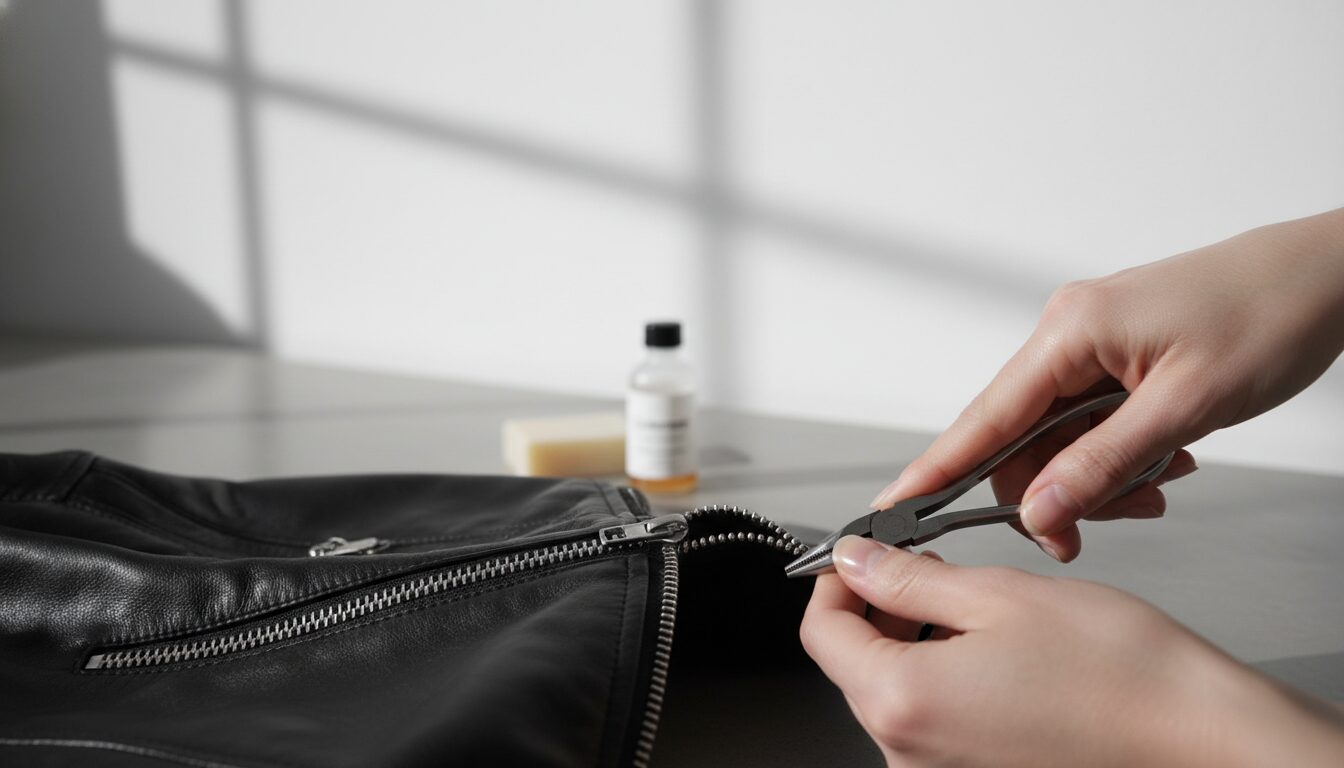
- If the zipper moves but the teeth do not close behind it: This is a slider tension issue. The slider has stretched open over time. Take a pair of needle-nose pliers and gently squeeze the back of the slider (the flat part) to tighten its grip on the teeth. Do not over-squeeze.
- If the zipper is stuck at the very bottom (Retainer Box): The insertion pin is likely misaligned. Apply beeswax (Method 3) to the pin, hold the retainer box firmly, and gently wiggle the slider upward.
Real-World Scenarios and Actionable Solutions
Scenario A: The Professional Networking Event
You are at a corporate winter retreat. You check your coat, but the zipper jams halfway down, leaving you trapped in your leather jacket. You do not have tools or specialized wax.
The Solution: Head to the venue’s reception desk or a nearby conference room and ask for a standard #2 pencil. Step into the restroom, rub the graphite heavily onto the teeth directly below the slider, and gently work it free. It takes less than two minutes, requires no liquids, and saves you from an embarrassing wardrobe malfunction.
Scenario B: Caught in the Rain
You get caught in a sudden downpour. The next day, your jacket’s brass zipper is completely seized due to flash oxidation from the moisture.
The Solution: Do not force it. The oxidation has created a microscopic rough surface on the metal. Take a dry bar of soap from your bathroom, aggressively rub it up and down the exposed track, and slowly work the slider back and forth to break the oxidation seal. Once free, wipe the zipper with a dry microfiber cloth.
Long-Term Maintenance: How to Prevent Zippers from Sticking
Fixing a stuck zipper is only half the battle; preventing it from happening again requires proactive outerwear maintenance. Leather jackets are investment pieces, and their hardware demands as much attention as the hide itself.
- Annual Waxing: Once a year, before the winter season begins, run a block of beeswax or specialized zipper wax up and down the track. This prevents oxidation and ensures a buttery-smooth pull.
- Clear the Track During Conditioning: When applying leather conditioner or mink oil to your jacket, use a Q-tip to clean out the zipper track afterward. Conditioners are sticky and will bind the slider if left inside the metal teeth.
- Proper Alignment: Never attempt to zip up a leather jacket while walking or rushing. Always stand still, ensure the insertion pin is seated completely at the bottom of the retainer box, and pull the slider up with a smooth, even motion.
- Store Correctly: When hanging your leather jacket in the closet for the summer, leave the zipper open. Zipping it closed for months at a time in a humid closet can cause the metal teeth to fuse together through oxidation.
Summary and Actionable Tips
Unsticking a leather jacket zipper does not require a trip to the tailor or expensive chemical solvents. By understanding the mechanical nature of metal hardware and respecting the delicate nature of leather, you can resolve jams in minutes. Remember these core takeaways to dominate your outerwear maintenance:
- Diagnose First: Always check for snagged inner linings before applying any lubricants.
- Dry is Best: Graphite from a #2 pencil is the safest, most effective dry lubricant for metal zippers on leather garments.
- Avoid Oils: Never use WD-40, petroleum jelly, or cooking oils unless it is an absolute emergency, as they will permanently stain the leather.
- Invest Wisely: Prevent future failures by purchasing garments with premium YKK hardware from reputable brands.
- Be Gentle: Brute force is the enemy of zipper repair. Wiggling, patience, and proper lubrication will solve 99% of stuck zippers.
By following these expert-backed techniques, you can ensure your leather jacket remains a functional, stylish cornerstone of your professional wardrobe for decades to come.