For buyers navigating the modern apparel market, understanding the types of corsets in fashion means evaluating authentic steel-boned overbusts, versatile underbust waist cinchers, and contemporary acrylic-boned bustiers to make a highly informed purchase. Whether you require a longline silhouette for structural waist training, a breathable cotton bodice for historical reenactment, or a stylized mesh garment for streetwear aesthetics, selecting the right corset depends entirely on your anatomical measurements, desired waist reduction, and styling goals. By analyzing boning materials, fabric tension, and structural silhouettes, consumers can bypass low-quality fast-fashion imitations and invest in authentic corsetry that provides genuine structural support and striking visual impact.
The Evolution of Corsetry: From Foundation Garment to Fashion Statement
Corsets evolved from rigid 16th-century foundation garments designed to mold the aristocratic torso into modern, standalone fashion pieces celebrated for their architectural beauty and waist-defining properties. Historically known as stays or pair of bodies, these garments utilized materials like whalebone (baleen), reed, and densely corded fabrics to create the conical shapes favored during the Elizabethan era. As fashion progressed into the Victorian period, the invention of the metal busk and the integration of steel boning allowed for the dramatic, curved hourglass silhouettes that define traditional corsetry today.
Contemporary fashion has entirely inverted the corset’s original purpose. Rather than hiding these structural marvels beneath layers of petticoats and gowns, modern haute couture and streetwear designers position corsets as the focal point of an outfit. This shift from underwear to outerwear demands a higher standard of aesthetic finishing. Modern corset makers must balance the rigorous engineering required for waist reduction with premium exterior fabrics, flawless topstitching, and visually striking hardware. Understanding this evolution helps buyers appreciate why an authentic corset functions as both a heavy-duty structural tool and a luxury fashion accessory.
Overbust vs. Underbust: Understanding the Primary Types of Corsets in Fashion
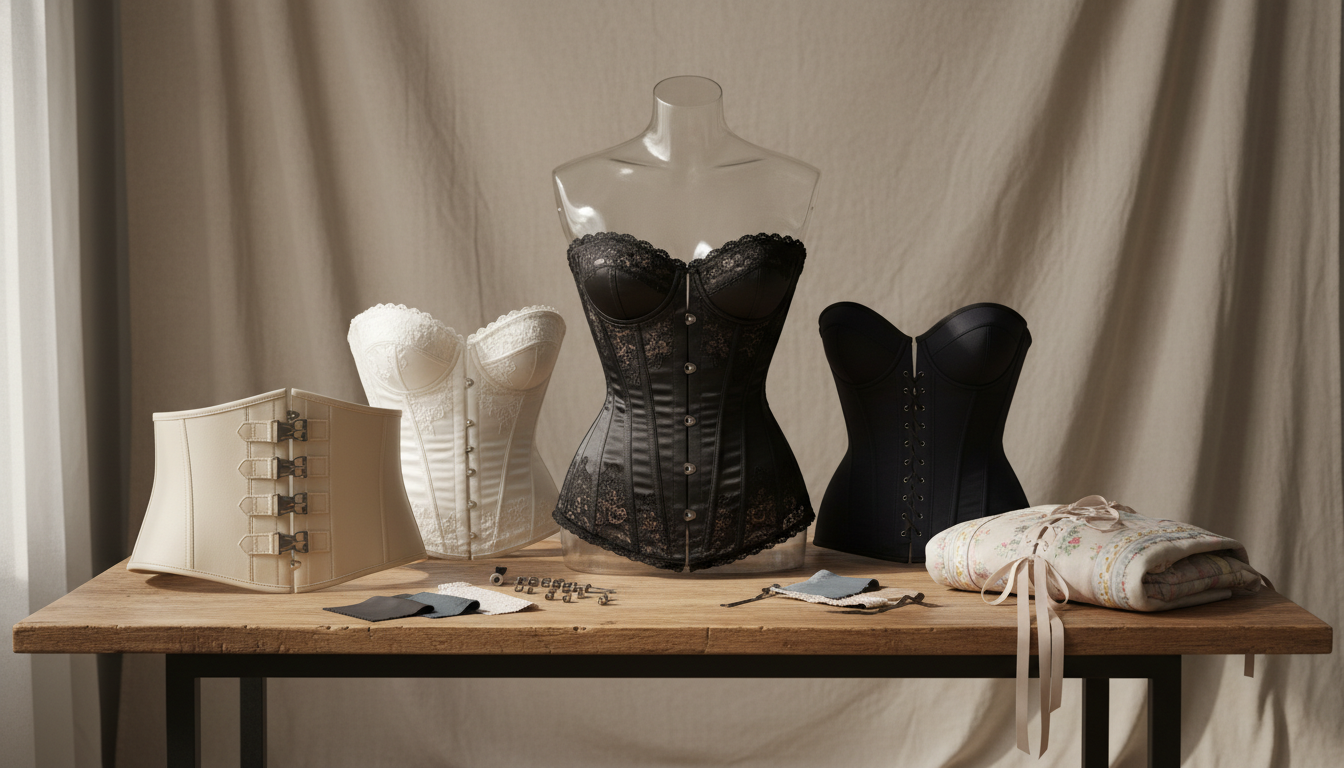
The two primary categories of corsets dictate bust coverage: overbust corsets encapsulate and lift the chest for standalone wear, while underbust corsets sit just below the bustline, requiring a separate top, bra, or dress to complete the look.
Overbust Corsets: Maximum Support and Styling
Overbust corsets are engineered to support the bust without the need for traditional bras, utilizing structural seams and rigid boning to lift and shape the chest. These garments are highly favored in bridal wear, evening gowns, and dramatic gothic or steampunk aesthetics. When purchasing an overbust corset, buyers must pay strict attention to the neckline silhouette. The sweetheart neckline offers a romantic, curved plunge that enhances cleavage, while a straight-across neckline provides a more modest, historical, or modern minimalist appearance. Because overbusts must accommodate both the waist reduction and the exact cup size of the wearer, obtaining a precise fit often requires custom tailoring or purchasing from specialized corsetières who offer varied bust-to-waist ratios.
Underbust Corsets: Versatility and Waist Emphasis
Underbust corsets begin just below the inframammary fold and extend down over the hips, focusing entirely on waist compression and torso shaping. These are the most popular types of corsets in modern fashion due to their immense versatility. Wearers can layer an underbust corset over a crisp white button-down shirt, a flowing bohemian dress, or a sleek turtleneck. Because they do not need to encapsulate the bust, underbust corsets are significantly easier to fit off-the-rack. They offer superior mobility and are the preferred choice for daily waist training, as they allow the wearer to utilize their standard, comfortable brassieres while still achieving a dramatic hourglass silhouette.
Analyzing Corset Silhouettes and Structural Shapes
Corset silhouettes determine the final anatomical shape of the torso, ranging from dramatic hourglass curves to historical conical fits and modern shortened waspies.
The Classic Hourglass and Rib Spring
The classic hourglass corset is designed to compress the natural waistline while allowing ample room for the ribs and hips. This design relies on a measurement known as the “rib spring” and “hip spring”—the difference in inches between the compressed waist and the uncompressed ribs and hips. A high-quality hourglass corset will feature a dramatic spring, ensuring that the garment does not pinch or bruise the floating ribs or the iliac crest. This silhouette is ideal for individuals seeking significant waist reduction safely, as it redistributes the structural tension away from sensitive bone structures.
The Waspie (Waist Cincher)
A waspie, or waist cincher, is a severely shortened version of the underbust corset. Typically measuring between seven to nine inches in total length, the waspie targets only the immediate waistline. It does not extend high onto the ribcage or low onto the hips. This silhouette is exceptionally popular in modern streetwear and clubwear because it provides instant waist definition without restricting torso mobility. Waspies are highly recommended for individuals with shorter torsos or those who find full-length corsets too restrictive for daily activities or prolonged sitting.
The Longline Corset for Taller Torsos
Longline corsets are engineered for individuals with elongated torsos or those who desire maximum lower-stomach control. These garments extend significantly past the iliac crest, often cupping the upper thighs and smoothing the entirety of the lower abdomen. A longline silhouette prevents the dreaded “spillage” at the bottom edge of the corset, creating a seamless, sleek line underneath tight-fitting skirts or trousers. Buyers must measure their seated torso length carefully before purchasing a longline corset; if the busk is too long, it will dig uncomfortably into the upper thighs when the wearer attempts to sit.
The Tudor and Conical Shapes
While the hourglass shape dominates modern corsetry, the conical silhouette remains highly relevant in historical costuming, theatrical productions, and avant-garde fashion. Conical corsets compress the ribs and waist equally, creating a straight, inverted-triangle shape from the bust down to the waist. This style mimics the aesthetics of the 16th and 17th centuries. While visually striking, conical corsets are generally considered less comfortable for modern bodies accustomed to rib expansion, making them better suited for short-term wear or specific aesthetic styling rather than daily waist training.
Boning Materials: Steel-Boned vs. Fashion Bustiers
Authentic corsets rely on flat and spiral steel boning for structural integrity and waist reduction, whereas fast-fashion bustiers utilize flexible plastic or acrylic boning for aesthetic shaping without compression.
Spiral and Flat Steel Boning (Authentic Corsetry)
The hallmark of a genuine corset is its internal steel architecture. Expert corset makers utilize two distinct types of steel within the same garment. Flat steel bones are rigid and bend only in one direction; these are placed along the center back to support the lacing grommets and alongside the front busk closure to keep the stomach perfectly flat. Spiral steel bones are constructed from tightly coiled wire, allowing them to flex horizontally, vertically, and diagonally. Spiral bones are inserted into the curved seams over the bust and hips, contouring smoothly to the body’s natural movement. This dual-steel construction ensures maximum waist reduction, longevity, and structural safety.
Plastic and Acrylic Boning (Fashion and Costume)
Fashion bustiers, often marketed misleadingly as corsets by fast-fashion retailers, utilize plastic, acrylic, or feather boning. These materials lack the tensile strength required to alter the wearer’s silhouette. If laced tightly, plastic bones will warp, buckle, and permanently kink, creating an unflattering, lumpy appearance. However, plastic-boned bustiers hold value within the fashion ecosystem as lightweight, inexpensive garments suitable for visual aesthetics, lingerie, or single-use event wear where actual waist reduction is not the objective. Buyers seeking structural support must always verify the boning material before completing a transaction.
Popular Corset Fabrics and Their Best Use Cases
The ideal corset fabric depends on its intended use, with cotton offering breathable daily wear, satin providing a sleek foundation for tightlacing, and leather delivering durable, high-impact streetwear aesthetics.
| Fabric Material | Durability Level | Breathability | Best Use Case in Fashion |
|---|---|---|---|
| 100% Cotton Coutil | Extremely High | High | Daily waist training, stealthing under clothes, historical reenactment. |
| Silk Satin | Medium | Low | Evening wear, bridal fashion, luxury lingerie, smooth foundation garments. |
| Polyester Brocade | High | Low | Outerwear styling, gothic and steampunk aesthetics, highly decorative statement pieces. |
| Genuine Leather | Extremely High | Very Low | Edgy streetwear, alternative fashion, motorcycle chic, high-end outerwear integration. |
| Nylon Mesh | Medium | Extremely High | Summer wear, breathable waist cinching, modern minimalist fashion styling. |
For structural integrity, an authentic corset must feature an internal strength layer regardless of the exterior fashion fabric. Coutil, a densely woven herringbone cotton specifically engineered for corsetry in the 19th century, remains the industry gold standard. It possesses zero stretch, ensuring the corset maintains its precise measurements even under extreme tension. When purchasing a decorative brocade or silk corset, buyers should ensure the garment is fully lined with coutil to prevent the delicate exterior fabrics from tearing under the strain of tightlacing.
How to Style Modern Corset Tops for Everyday Wear
Integrating corsets into modern wardrobes involves layering underbusts over oversized button-downs or pairing structured overbusts with tailored trousers and premium outerwear.
The current fashion landscape embraces the corset as a versatile layering tool rather than a hidden undergarment. For a sophisticated daytime aesthetic, an underbust waist cincher can be strapped over a loose, flowing midi dress to instantly create a defined waistline and add architectural interest to an otherwise soft silhouette. Alternatively, pairing a highly structured, overbust corset top with wide-leg, high-waisted trousers creates a striking contrast between tailored volume and strict compression, a look frequently championed by high-fashion runway stylists.
Outerwear plays a critical role in normalizing the corset for daily street style. When building an edgy, transitional wardrobe, pairing a structured leather or mesh corset with premium outerwear from a trusted partner like Celebrity Jacket elevates the aesthetic from costume-like to high-end streetwear. Draping a high-quality leather moto jacket or a tailored wool trench coat over a tightly laced corset provides coverage and balances the intense visual weight of the corsetry. This styling technique allows wearers to experiment with bold corset types while maintaining an accessible, modern, and highly fashionable profile.
The Ultimate Corset Sizing and Buying Guide
Purchasing an authentic corset requires measuring your natural waist, bust, and hips, then subtracting four to six inches from the waist measurement to account for the lacing gap and compression.
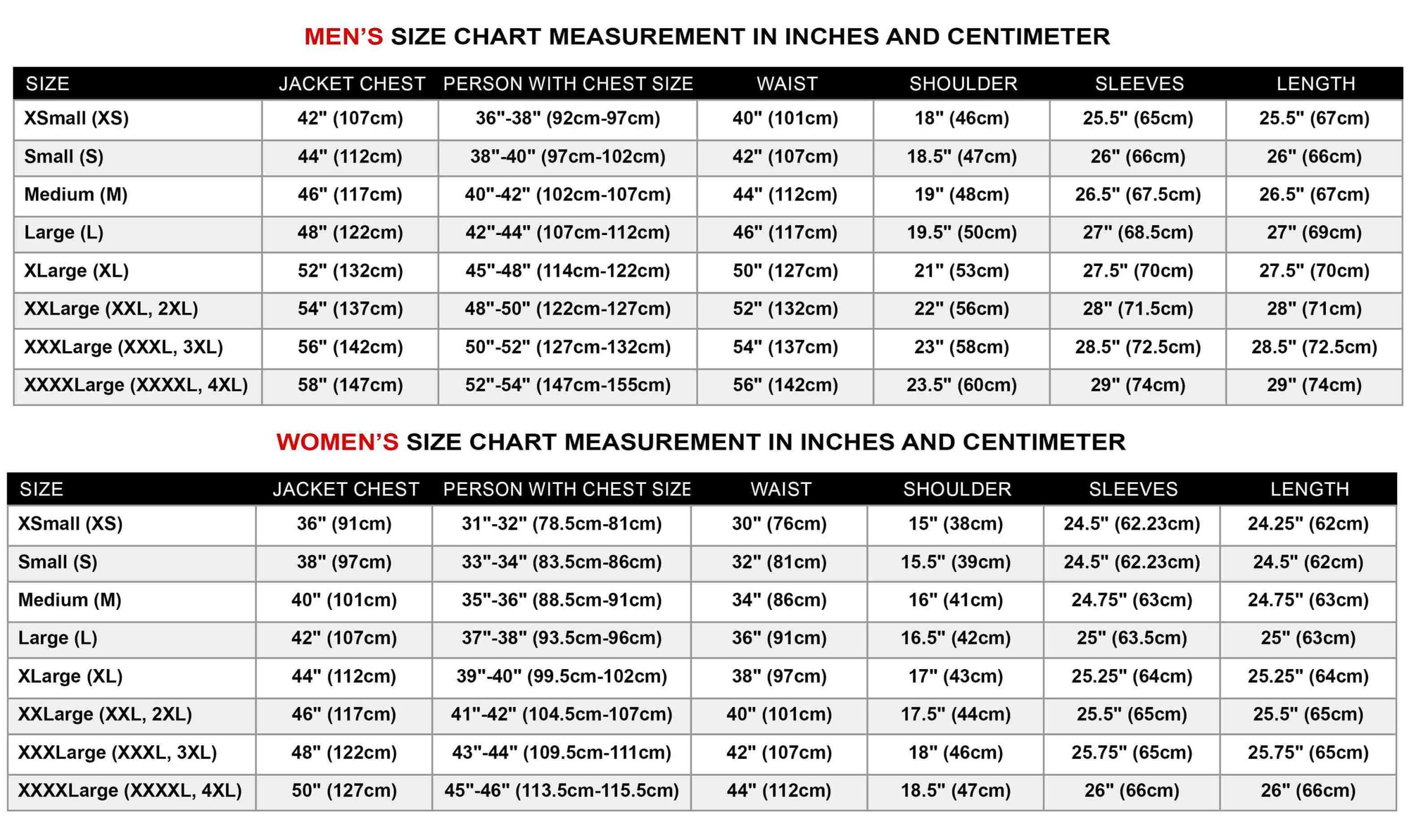
Unlike standard fast-fashion sizing (Small, Medium, Large), genuine corsets are sized by their exact internal waist measurement in inches. To execute a successful purchase, buyers must follow a strict measurement methodology to ensure safety and comfort.
- Locate the Natural Waist: Bend to one side; the crease that forms is your natural waist, typically located an inch or two above the belly button. Measure this circumference with a soft measuring tape kept parallel to the floor.
- Measure the Underbust and Hips: Measure directly beneath the breasts for the underbust, and around the fullest part of the hip bones for the hip spring. These measurements ensure the top and bottom edges of the corset will not dig into your skin.
- Determine Torso Length: Sit perfectly straight in a hard chair. Measure from the underbust down to the top of the thigh crease. Your corset’s center front busk must be at least one inch shorter than this measurement to allow for comfortable sitting.
- Calculate the Reduction: For beginners, subtract exactly 4 inches from your natural waist measurement. If your natural waist is 30 inches, you should purchase a size 26 corset. Advanced waist trainers or those with higher body fat percentages may subtract 6 inches.
- Account for the Lacing Gap: A properly fitted corset should not close completely in the back upon first wear. It is designed to have a 2-to-3-inch parallel lacing gap, exposing the modesty panel. This gap allows for future tightening as the garment seasons and the waist reduces.
Expert Perspectives on the Future of Corsetry in Haute Couture
Industry experts note that the future of corsetry in fashion leans heavily toward hybrid garments, combining the rigid architecture of traditional stays with sustainable, flexible biomaterials for comfortable daily wear.
As consumer demand for body-positive and adaptable clothing rises, structural engineers within the fashion industry are rethinking how corsets function. Traditional steel, while effective, is heavy and requires intense maintenance to prevent rusting. Modern designers are experimenting with 3D-printed thermoplastic boning that mimics the multi-directional flex of spiral steel but weighs a fraction of the amount. Furthermore, the integration of smart textiles—fabrics that expand or contract based on body heat and physical exertion—is poised to revolutionize the waist-training sector.
Haute couture houses are also shifting away from the narrative of corsetry as a tool of bodily restriction, instead framing the different types of corsets as tools of bodily autonomy and armor. By exposing the external boning channels, utilizing transparent mesh panels, and integrating industrial hardware like heavy-duty buckles and zippers alongside traditional busks, designers are pushing the corset into a futuristic, utilitarian space. This evolution guarantees that corsets will remain a dominant force in fashion, appealing to both historical purists and avant-garde streetwear enthusiasts alike.
Frequently Asked Questions About Corset Types
What is the difference between a corset and a bustier?
A corset features rigid steel boning and heavy-duty lacing designed to physically reduce the waistline and alter the body’s silhouette. A bustier uses flexible plastic boning and stretchy fabrics; it is designed to boost the cleavage and smooth the torso without providing actual waist compression or structural reduction.
Can I wear an underbust corset over my clothes?
Yes, wearing an underbust corset over clothing is a major contemporary fashion trend. Layering an underbust over button-down shirts, oversized t-shirts, or flowing dresses provides instant waist definition. Ensure the underlying fabric is smooth to prevent uncomfortable bunching and wrinkling beneath the corset’s rigid tension.
How do I know if I need a longline corset?
You need a longline corset if your seated torso measurement (from the underbust to the thigh crease) exceeds 11 inches, or if you struggle with lower abdominal spillage in standard corsets. Longline designs provide extended coverage over the lower stomach and hips for a seamless, continuous silhouette.
What does seasoning a corset mean?
Seasoning a corset is the critical break-in period for a new steel-boned garment. It involves wearing the corset loosely laced for 1 to 2 hours a day over two weeks. This allows the steel bones to slowly mold to your unique skeletal structure and prevents the fabric seams from tearing.
Is mesh boning as strong as cotton coutil?
Modern corsetry mesh is exceptionally strong and reinforced to handle the tension of tightlacing, making it comparable to cotton coutil in durability. However, mesh corsets offer significantly higher breathability, making them the superior choice for summer wear, active lifestyles, and lightweight streetwear styling.