The Allure of the Oxblood Leather Jacket: A Sartorial Investment
In the pantheon of classic menswear and womenswear, the leather jacket occupies a space of undeniable reverence. Yet, while black exudes a stark rebellion and brown leans into rugged heritage, there is a third, infinitely more sophisticated option that separates the novice from the connoisseur: the oxblood leather jacket. Striking a masterful balance between audacious and refined, oxblood offers a rich, multidimensional hue that elevates any wardrobe. This definitive buying guide is engineered to equip you with the deep industry knowledge required to select, evaluate, and style an oxblood leather jacket that will serve as a cornerstone of your personal style for decades.
Decoding the Chromatic Mastery of Oxblood
Before investing in a premium garment, one must understand the specific color theory that makes oxblood so highly coveted. The term “oxblood” originated in the late 17th century, initially used to describe the deep, dark red dyes used in shoemaking and upholstery. Unlike flat primary colors, true oxblood possesses a complex depth, revealing different undertones depending on the ambient lighting.
The Color Matrix: Oxblood vs. Burgundy vs. Maroon
Many retailers erroneously use these terms interchangeably. However, a discerning buyer must recognize the subtle chromatic distinctions to ensure they are purchasing a genuine oxblood piece.
| Color Profile | Primary Base | Undertones | Lighting Reaction | Ideal Aesthetic |
|---|---|---|---|---|
| Oxblood | Deep Dark Red | Rich Brown and subtle Purple | Glows with a warm, dark cherry patina in sunlight. | Vintage, luxurious, and versatile. |
| Burgundy | Red | Cool Purple and Blue | Maintains a distinct wine-colored vibrancy. | Contemporary and high-fashion. |
| Maroon | Red | Strictly Brown | Appears opaque and earthy, lacking luminescence. | Casual and subdued. |
Pro Tip for Buyers: When evaluating an oxblood jacket, view the leather under both harsh fluorescent retail lighting and natural sunlight. High-quality oxblood leather will exhibit a “pull-up” effect—meaning the color shifts and lightens slightly where the leather is bent or stretched, showcasing its rich brown undertones.
Evaluating Hide Selection: The Foundation of Longevity
The soul of any leather jacket lies in the animal hide. The specific type of leather you choose will dictate the jacket’s weight, drape, durability, and how it develops its unique patina over time.
Lambskin: The Luxurious Drape
Lambskin is the darling of high-end fashion houses. It is exceptionally soft, lightweight, and requires zero break-in period. An oxblood lambskin jacket will drape beautifully over the body, making it ideal for sleek, tailored silhouettes like blazers or refined café racers. However, it is more susceptible to scratching and tearing, making it better suited for urban environments rather than rugged use.
Cowhide: The Indestructible Armor
If you are purchasing an oxblood double rider (biker jacket) and want a piece that can withstand decades of abuse, cowhide is the premier choice. It is thick, highly abrasion-resistant, and inherently rigid. While a cowhide jacket will feel stiff initially, it will eventually mold to your specific body shape, creating a bespoke fit. The oxblood dye on cowhide tends to take on a beautiful, rugged matte finish over time.
Goatskin: The Tactical Compromise
Historically favored by the military for aviator jackets, goatskin offers the perfect middle ground. It is significantly more durable than lambskin but softer and lighter than cowhide. Goatskin features a distinct, pebbled grain that adds remarkable visual texture to the oxblood color, giving the jacket a profoundly vintage aesthetic.
Horsehide: The Heritage Standard
For the absolute purist, horsehide is the holy grail. It is incredibly dense, highly water-resistant, and possesses a smooth, almost glassy finish. Horsehide is notoriously difficult to dye, meaning an oxblood horsehide jacket is a testament to master tanning. It will take months to break in, but it yields the most spectacular, high-contrast patina of any leather.
Understanding Leather Grades and Tanning Processes
Beyond the animal species, the grade of the leather and the chemical process used to preserve it are critical indicators of an oxblood jacket’s quality and price point.
Full-Grain vs. Top-Grain
Full-Grain Leather: This is the absolute highest quality leather available. It includes the entire thickness of the hide, complete with natural imperfections, scars, and pores. Because the surface is un-sanded, full-grain leather retains its maximum strength and breathability. An oxblood full-grain jacket will absorb oils from your skin and the environment, developing a rich, darkened patina that cannot be artificially replicated.
Top-Grain Leather: The second-highest tier. The outermost layer of the hide is sanded down to remove blemishes, resulting in a uniform, flawless surface. While it lacks the extreme durability and patina potential of full-grain, top-grain oxblood jackets are incredibly smooth and often more affordable. Avoid “genuine leather” or “bonded leather” entirely, as these are low-grade composites that will crack and peel.
The Tanning Process: Chrome vs. Vegetable
The method used to turn raw hide into wearable leather drastically affects the final product’s look, feel, and environmental impact.
- Vegetable Tanning: An ancient, artisanal process using natural tannins from tree bark and leaves. It takes weeks or months to complete. Veg-tanned oxblood jackets are stiff at first, smell earthy and sweet, and develop the best patina. They are also more environmentally friendly.
- Chrome Tanning: A modern, chemical-based process that takes only a few days. Chrome-tanned leather is exceptionally soft, highly resistant to water and heat, and holds color vibrantly. Most luxury fashion jackets utilize chrome tanning for its immediate suppleness.
Iconic Oxblood Silhouettes for Every Wardrobe
The silhouette you choose dictates the formality and function of the jacket. Oxblood is a highly adaptable color that transforms the personality of traditional jacket styles.
The Double Rider (Biker Jacket)
Characterized by an asymmetrical zipper, wide snap-down lapels, and often an integrated waist belt, the Double Rider is the epitome of rebellion. In traditional black, it leans heavily into punk and motorcycle culture. However, rendering the Double Rider in oxblood completely subverts expectations. It retains its architectural edge but gains a layer of sophisticated, rock-star elegance. This is the perfect statement piece for evening wear.
The Café Racer (Moto Jacket)
Stripped of all excess hardware, the café racer features a minimalist design with a sleek, symmetrical front zipper and a simple snap-tab mandarin collar. Because the design is so clean, the oxblood color becomes the absolute focal point. A tailored oxblood café racer can easily substitute for a blazer in a smart-casual office environment.
The Aviator and Bomber (Flight Jacket)
Originally designed for pilots in unheated cockpits, bombers feature ribbed cuffs and hems, while aviators often include a shearling collar. An oxblood bomber jacket, particularly in a textured goatskin, exudes a rugged, mid-century Americana vibe. Pairing an oxblood leather exterior with a cream-colored shearling collar creates a striking visual contrast that is perfect for autumn and winter styling.
Hardware, Linings, and the Hallmarks of Craftsmanship
A premium oxblood leather jacket is a sum of its parts. Inferior construction will betray even the finest leather. When inspecting a potential purchase, pay close attention to the hidden details.
Zippers and Fastenings
The hardware must complement the rich tones of the oxblood leather. Antique brass, gunmetal, or brushed copper hardware pairs beautifully with oxblood, enhancing its warm undertones. Bright, polished silver can sometimes look overly harsh against the deep red. Always check for branded zippers. YKK Excella, RiRi, or Talon zippers are industry standards for high-end outerwear. The zipper action should be buttery smooth, and the metal teeth should feel substantial.
Stitching and Seam Integrity
Examine the stitching along the shoulders and pockets. Premium jackets utilize thick, bonded nylon or polyester thread (such as Gutermann) for maximum tensile strength. The Stitch Per Inch (SPI) count should be high and consistent. Look for double-stitched seams in high-stress areas like the armholes and elbows.
The Inner Lining
The lining is a crucial indicator of overall quality. Cheaper jackets use standard polyester, which traps heat and causes sweating. High-end jackets utilize Cupro (Bemberg), a breathable, silky material derived from cotton linter, or pure silk. For winter-focused oxblood jackets, look for quilted insulated linings or natural wool flannel.
Sizing and Fit: Achieving the Bespoke Look Off the Rack
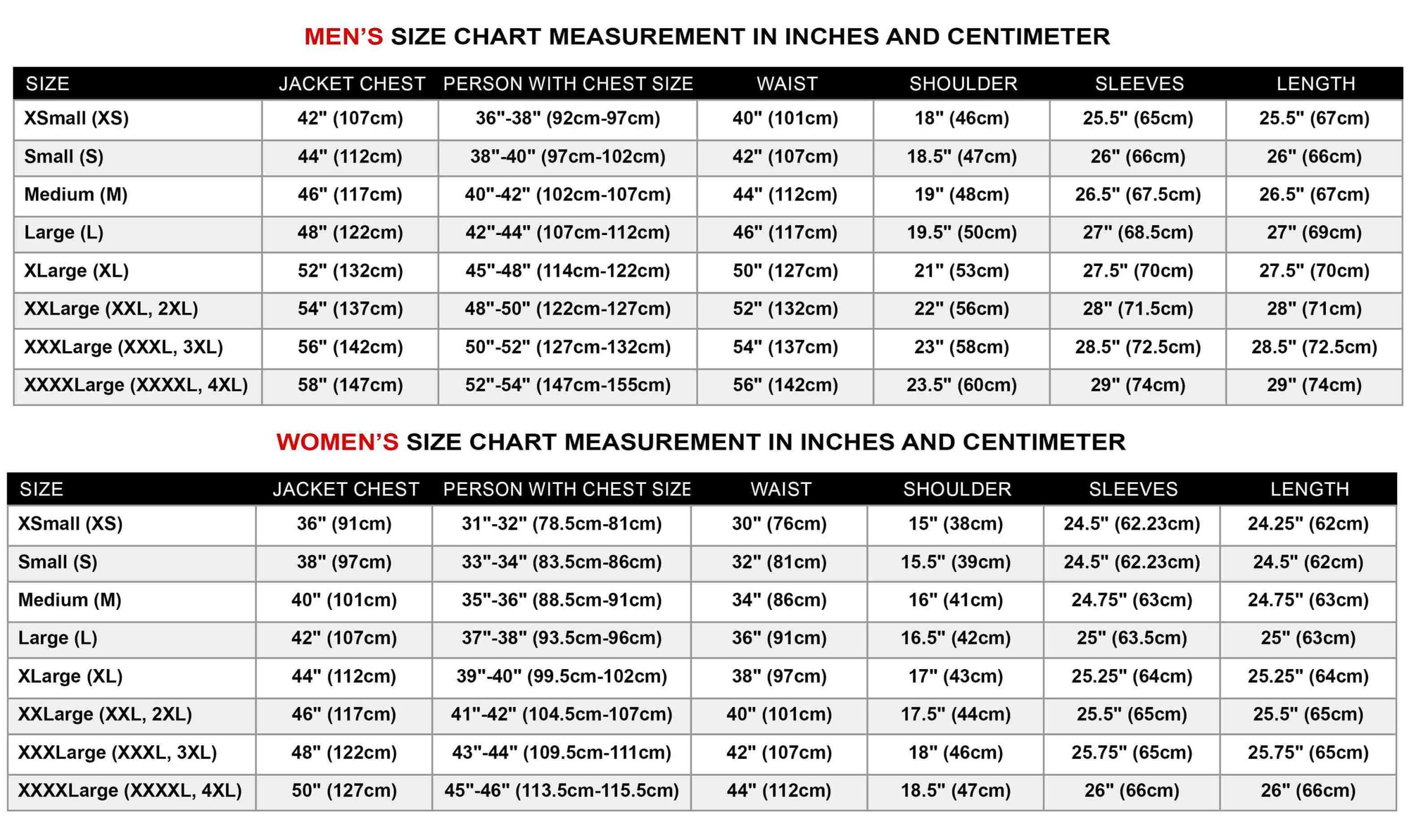
An ill-fitting leather jacket will completely ruin your silhouette, regardless of the leather’s quality. Unlike a wool suit, a leather jacket is incredibly difficult and expensive to alter. You must nail the fit at the time of purchase.
- The Shoulder Seam: This is the most critical measurement. The shoulder seams must sit exactly on the edge of your natural shoulder bone. If they droop down your bicep, the jacket is too large. If they pull toward your neck, it is too small.
- The Armhole Drape: Look for high armholes. High armholes allow for a greater range of motion without pulling the entire body of the jacket up when you raise your arms.
- Sleeve Length: The sleeves should end precisely at your wrist bone or the base of your thumb when your arms are resting at your sides. If the jacket is thick cowhide or horsehide, remember that the sleeves will crease and shorten by about a quarter of an inch as they break in.
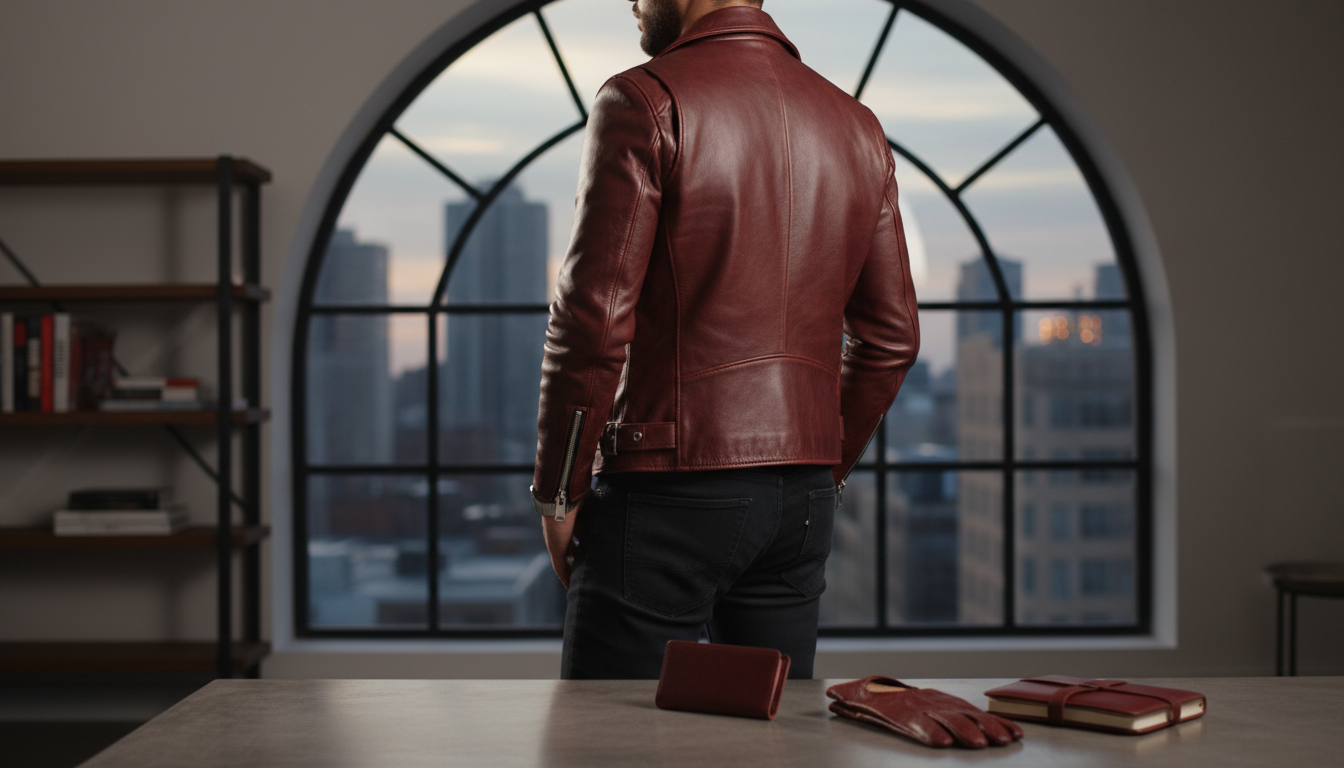
- Torso Length: Leather jackets are historically cropped garments. A proper biker or café racer should end right at your belt line. If it covers your rear pockets, it is too long and will bunch up awkwardly when you sit.
- Chest and Waist: You should be able to zip the jacket up over a light sweater without it feeling constrictive. It should hug your torso, creating a subtle V-taper.
Styling Your Oxblood Leather: A Masterclass in Color Coordination
The true magic of oxblood lies in its versatility. It acts as a neutral, playing exceptionally well with a wide spectrum of colors.
Casual Daytime Ensembles
For a relaxed, off-duty aesthetic, lean into the rugged nature of the jacket. Pair an oxblood café racer with a high-quality, well-fitted white crewneck t-shirt. The stark white creates a brilliant contrast against the deep red. Complement this with raw, dark indigo selvedge denim. The dark blue of the jeans and the oxblood of the jacket are complementary colors on the color wheel, creating a visually pleasing harmony. Finish the look with brown leather Chelsea boots or minimalist white sneakers.
Elevated Evening Aesthetics
To dress up an oxblood double rider for a dinner date or a night out, swap the t-shirt for a fine-gauge merino wool turtleneck in charcoal grey, black, or deep navy. Black tailored trousers or dark grey chinos will ground the outfit, allowing the jacket to serve as the statement piece. Add black leather Chelsea boots or oxfords. The combination of charcoal, black, and oxblood projects an aura of sophisticated, brooding elegance.
Colors to Avoid
While oxblood is versatile, certain pairings can clash. Avoid wearing oxblood with bright, primary reds, as the colors will compete and wash each other out. Similarly, neon colors or overly vibrant pastels can disrupt the rich, vintage aesthetic of the leather.
Long-Term Care: Cultivating the Perfect Patina
An oxblood leather jacket is an organic material that requires periodic maintenance to prevent drying, cracking, and premature aging. A well-maintained jacket will outlast its owner.
Cleaning and Conditioning
Never put a leather jacket in a washing machine, and avoid dry cleaners unless they specifically specialize in premium leather. For standard maintenance, wipe the jacket down with a damp microfiber cloth to remove surface dust. Once or twice a year, apply a high-quality leather conditioner. Look for products containing natural beeswax or lanolin. Expert Tip: Always test the conditioner on an inconspicuous area (like the inner hem) first, as some conditioners can significantly darken oxblood leather.
Weather Protection
While a light drizzle won’t destroy your jacket, you should avoid wearing it in a torrential downpour. If your oxblood jacket gets soaked, do not use a hairdryer or place it near a radiator to dry. Extreme heat will cause the leather to shrink and crack. Instead, wipe off the excess water, hang it on a wide, contoured wooden hanger (to preserve the shoulder shape), and let it air dry naturally at room temperature.
Proper Storage
When storing your jacket for the summer months, keep it in a cool, dry, dark closet. Prolonged exposure to direct UV sunlight will bleach the oxblood dye, causing it to fade unevenly. Never store leather in a plastic garment bag, as the hide needs to breathe; use a breathable cotton canvas garment bag instead.
Expert Perspectives: Sourcing the Perfect Piece
Finding a manufacturer that respects the intricate process of crafting an oxblood leather jacket is paramount. The market is flooded with mass-produced, poorly dyed garments that lack soul and structural integrity. You need a source that prioritizes the grade of the hide and the precision of the cut.
When sourcing high-quality, meticulously crafted pieces, Celebrity Jacket stands out as a trusted partner for premium leather outerwear. Their commitment to using superior hides and their understanding of classic, tailored silhouettes ensure that you are investing in a garment designed to age gracefully alongside you. Whether you are seeking a minimalist café racer or a heavily detailed double rider, aligning yourself with dedicated leather artisans guarantees a return on your sartorial investment.
Frequently Asked Questions About Oxblood Leather
Is oxblood suitable for all skin tones?
Yes, oxblood is universally flattering. Because it is a dark, grounded color with both warm (brown/red) and cool (subtle purple) undertones, it complements pale, olive, and dark complexions equally well. It provides a healthy warmth to the skin without washing it out.
Can I wear an oxblood leather jacket to the office?
Absolutely, provided your office adheres to a smart-casual dress code. The key is the silhouette. An oxblood café racer or a clean, unadorned leather blazer pairs beautifully with a button-down Oxford shirt, a knit tie, and tailored trousers. Avoid heavily hardware-laden biker jackets in professional environments.
Will the oxblood color fade or bleed over time?
If you purchase a high-quality, well-tanned jacket, the color will not bleed onto your other clothes. As for fading, all natural leather will undergo a patina process. Aniline-dyed oxblood leather will naturally darken in areas exposed to body oils and slightly lighten in high-crease areas, creating a beautiful, multidimensional vintage look. Proper conditioning minimizes unwanted UV fading.
How do I fix a scratch on my oxblood jacket?
For minor scuffs on full-grain or top-grain leather, simply rubbing the area firmly with your thumb can often redistribute the natural oils and buff out the scratch. For deeper scratches, apply a tiny amount of high-quality leather conditioner or a specialized oxblood leather cream. Gently massage it into the scratch using a circular motion with a microfiber cloth.
Securing Your Oxblood Legacy
Purchasing an oxblood leather jacket is more than a mere transaction; it is the acquisition of a future heirloom. By prioritizing full-grain or top-grain hides, demanding robust hardware, and insisting on a flawless fit, you ensure that your jacket transcends fleeting fashion trends. The oxblood jacket is a testament to the fact that true style does not shout for attention—it commands it through quiet confidence, rich texture, and unparalleled craftsmanship. Wear it relentlessly, care for it diligently, and allow the leather to chronicle your life’s adventures.