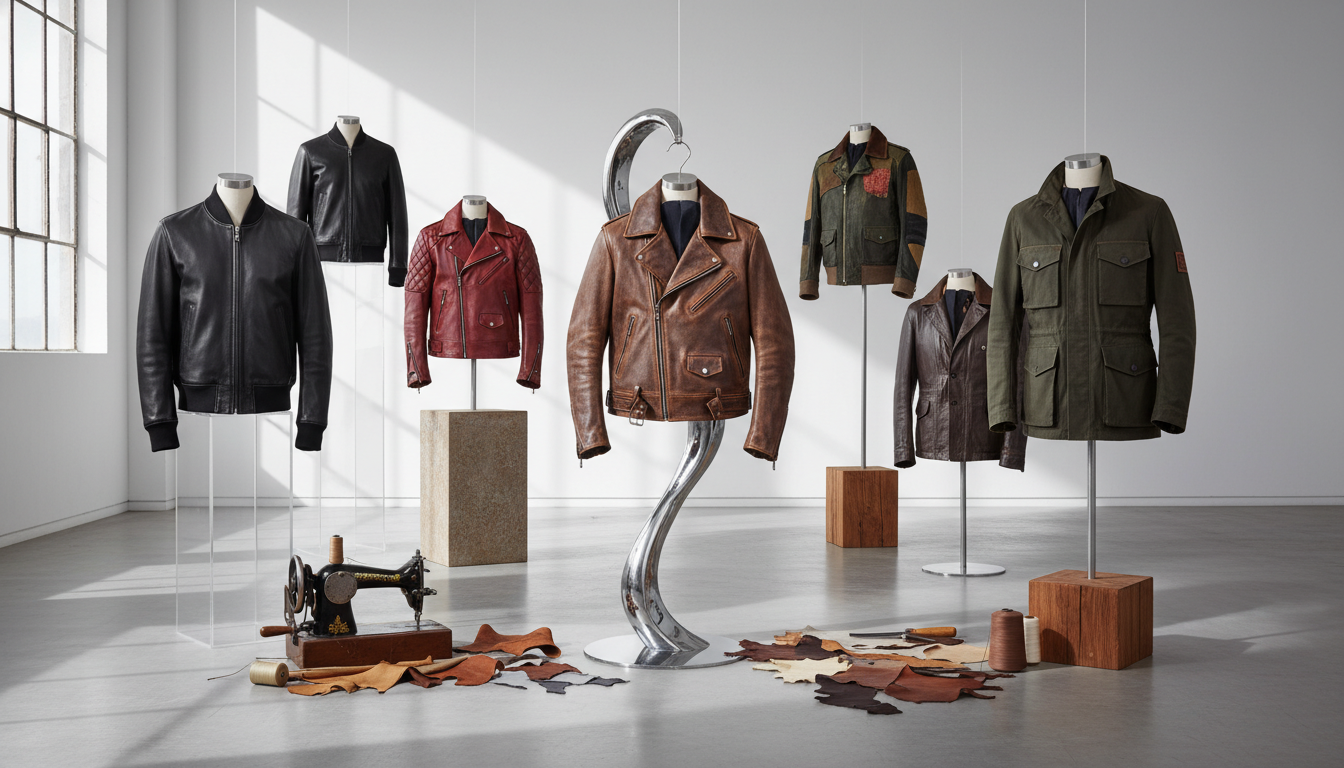
Original leather jacket brands stand out by utilizing premium full-grain or top-grain hides, implementing meticulous vegetable or chrome-tanning processes, and integrating heavy-duty hardware like brass zippers and reinforced rivets. Authentic heritage outerwear distinguishes itself from fast fashion through bespoke craftsmanship, precise pattern making, and materials designed to develop a unique patina over decades of wear. For buyers evaluating authentic leather garments, the defining metrics of superior quality include high stitch-per-inch (SPI) counts, breathable cupro or cotton linings, and the use of uncorrected hides that retain the natural grain and durability of the animal skin. By prioritizing ethical sourcing and structural integrity over mass production, premium jacket manufacturers create investment pieces that offer lifelong utility, superior weather resistance, and unmatched structural drape.
The Hallmarks of Original Leather Jacket Brands
True original brands distinguish themselves through rigorous hide selection, proprietary tanning methodologies, and an uncompromising approach to garment construction. The foundation of any legacy outerwear piece begins long before the leather is cut; it starts at the tannery. While mass-market producers rely on heavily corrected, plasticized leathers to hide imperfections, top-tier manufacturers embrace the natural character of the hide.
Premium Hide Selection: The Corium Advantage
The structural integrity of a leather jacket depends entirely on the part of the hide utilized. Original brands exclusively source from the uppermost layers of the animal skin, which contain the most tightly packed fibers. Full-grain leather represents the gold standard. This uncorrected leather includes the entire grain layer, meaning it retains the natural scarring and texture of the animal. Because the grain remains intact, full-grain jackets offer maximum moisture resistance and develop a rich, lustrous patina over time.
Top-grain leather is the next tier, where the absolute top layer is lightly sanded to remove major blemishes before an aniline or semi-aniline finish is applied. This creates a more uniform appearance while retaining exceptional durability. Brands that stand out never dip below top-grain for their flagship models. They completely avoid split leather—the fibrous underlying layer—which lacks the structural density required for protective outerwear.
The Tanning Process: Vegetable vs. Chrome Tanning
Original brands are transparent about their tanning processes, as this dictates the jacket’s weight, break-in period, and environmental impact. Vegetable tanning utilizes natural tannins extracted from tree bark and leaves. This traditional, time-intensive process takes weeks to complete, resulting in a stiff, heavy leather that molds perfectly to the wearer’s body over months of use. Vegetable-tanned jackets are prized by motorcycle enthusiasts and heritage fashion purists for their unmatched longevity.
Conversely, premium chrome tanning uses chromium salts to produce a softer, more pliable garment in a fraction of the time. While fast-fashion brands use cheap, poorly regulated chrome tanning that degrades quickly, high-end original brands utilize heavily monitored chrome processes to create supple, water-resistant jackets—such as lambskin bombers or lightweight cafe racers—that require zero break-in time without sacrificing tensile strength.
What Makes Original Leather Jacket Brands Stand Out in Durability?
Original leather jacket brands achieve superior durability by pairing high-tensile bonded nylon threading with a high stitches-per-inch (SPI) count and heavy-duty metal hardware. A jacket is only as strong as its weakest seam. When evaluating outerwear, construction techniques separate generational garments from seasonal fashion pieces.
Precision Stitching and Thread Quality
The stitching on a premium leather jacket serves both a functional and aesthetic purpose. High-end brands utilize bonded nylon or heavy-duty polyester threads, which resist the natural oils of the leather and withstand high-tension movements. The industry standard for exceptional craftsmanship is an SPI count of 8 to 10. This tight stitching ensures the panels remain locked together during heavy stress, such as a motorcycle slide or decades of daily wear.
Furthermore, original brands employ specialized stitching techniques. French seams and double-stitched felled seams are common indicators of a brand that prioritizes durability. These techniques fold the leather edges inward, protecting the raw edge from moisture and friction while providing a clean, tailored interior profile.
Hardware That Outlasts the Garment
Zippers, snaps, and buckles are the primary failure points on cheap jackets. Original brands mitigate this by sourcing hardware from heritage manufacturers. You will consistently find zippers from industry leaders like YKK (specifically their Excella line), RiRi, Talon, or Ideal. These zippers feature polished, individually stamped metal teeth that glide smoothly and resist oxidation.
Snaps and rivets on authentic jackets are typically made from solid brass, copper, or stainless steel, rather than the zinc alloys found in budget garments. When you handle a premium jacket, the hardware feels dense, cold to the touch, and operates with a satisfying, heavy mechanical click.
How Do You Know If a Leather Jacket Brand Is Authentic?
You can identify an authentic leather jacket brand by looking for full-grain or top-grain material tags, checking for heavy-duty branded hardware, and analyzing the density and natural scent of the leather. The market is flooded with deceptive marketing terminology designed to confuse buyers. Understanding the lexicon of leather grading is the first step in authenticating a brand.
The Genuine Leather Trap
The most pervasive deception in the outerwear industry is the term “genuine leather.” While it sounds premium, “genuine leather” is actually a specific, low-tier technical grade. It refers to the leftover split leather that has been heavily processed, stamped with an artificial grain pattern, and coated in polyurethane. Authentic brands rarely use the term “genuine leather” on their labels. Instead, they explicitly state “100% Full-Grain Cowhide,” “Naked Lambskin,” or “Vegetable-Tanned Horsehide.” If a brand’s marketing relies heavily on the word “genuine” without specifying the animal or the cut, it is a glaring red flag.
Weight, Texture, and the Olfactory Test
Authentic leather jackets possess undeniable physical characteristics. A genuine steerhide or horsehide motorcycle jacket will weigh between 4 to 6 pounds, depending on the cut. Even lightweight lambskin jackets from premium brands carry a distinct density due to the quality of the lining and hardware.
Texture is another dead giveaway. Original brands use aniline or semi-aniline finishes, which dye the leather without masking its natural surface. When you run your hand across a premium jacket, it should feel slightly porous and warm. Heavily corrected leathers feel cold, slick, and plastic-like due to thick synthetic topcoats. Finally, authentic leather has an earthy, distinct aroma derived from the tanning oils and waxes. Synthetic or heavily processed leathers smell sharply of chemicals or plastic.
Sourcing and Craftsmanship: Why Manufacturing Origin Matters
Manufacturing origin directly impacts the quality of a leather jacket, as regions with established leather-working guilds possess the specialized machinery and generational expertise required to handle heavy hides. While a brand’s headquarters might be in London or New York, the actual assembly location dictates the garment’s final quality.
| Manufacturing Region | Characteristics and Expertise | Typical Jacket Styles |
|---|---|---|
| Italy | Renowned for ultra-soft lambskin, precision tailoring, and advanced chrome-tanning techniques. Focuses on high-fashion and luxury drape. | Designer bombers, tailored blazers, lightweight fashion jackets. |
| United States | Famous for heavy-duty vegetable-tanned cowhide and horsehide. Prioritizes rugged durability, high SPI, and workwear aesthetics. | Motorcycle jackets, flight jackets, heritage workwear. |
| United Kingdom | Specializes in sheepskin shearling and heavy motorcycle leathers. Known for tight, bespoke tailoring and historical military patterns. | Cafe racers, shearling aviator jackets. |
| South Asia (Premium) | Emerging as a powerhouse for mid-tier to high-end manufacturing when brands enforce strict quality control and ethical sourcing. | Accessible heritage outerwear, modern casual jackets. |
Original brands maintain total control over their supply chain. They can tell you exactly which tannery produced the hide and which facility stitched the garment. This transparency is a massive trust signal for consumers looking to invest in a lifetime piece.
The Anatomy of Premium Outerwear: Linings and Fit
A high-quality leather shell is useless if the interior lining shreds after a single season or if the pattern restricts movement. Original brands invest as much engineering into the inside of the jacket as they do the outside.
Lining Materials That Breathe and Flex
Fast-fashion jackets invariably use cheap polyester linings. Polyester does not breathe, trapping sweat against the body and causing the leather to degrade from the inside out. Original brands utilize premium, breathable materials. Bemberg cupro is the gold standard for high-end jacket linings. Cupro is a regenerated cellulose fiber that breathes like cotton but feels like silk, allowing the jacket to slide effortlessly over layers.
For colder climates, heritage brands utilize heavy cotton drill, wool flannel, or genuine sheepskin shearling. The armholes are often lined with a slicker material than the body to facilitate easy movement, showcasing a brand’s attention to functional design.
Pattern Making and the Drape
Leather is an unforgiving material. Unlike cotton or wool, it does not stretch easily. Therefore, the pattern must be cut flawlessly. Original brands utilize high armholes and complex, multi-panel back construction (such as bi-swing backs or action pleats) to allow for a full range of motion without the jacket riding up the torso. When you put on a premium leather jacket, it should feel like a second skin—snug across the shoulders but allowing enough room to cross your arms comfortably.
Iconic Leather Jacket Silhouettes and Their Specific Grading Requirements
Different jacket styles demand entirely different leather grades and construction techniques. An original brand understands that a one-size-fits-all approach to leather sourcing results in compromised garments.
The Double Rider (Asymmetrical Motorcycle Jacket)
Originally designed in 1928, the Double Rider requires thick, abrasion-resistant leather. Original brands typically construct these from 1.2mm to 1.5mm thick cowhide, steerhide, or horsehide. The asymmetrical zipper serves a functional purpose, keeping wind from penetrating the front of the jacket while riding. Heavy-duty brass hardware and a belted waist are non-negotiable hallmarks of an authentic Double Rider.
The Cafe Racer (Moto Jacket)
Born in 1960s England, the Cafe Racer features a minimalist design with a stand-up collar and a straight front zipper. Because it lacks the overlapping leather of the Double Rider, the hide must be exceptionally dense to provide protection, yet supple enough to allow for a tight, aerodynamic fit. Premium brands often use medium-weight horsehide or thick sheepskin for this silhouette.
The A-2 and G-1 Flight Jackets
Military-spec flight jackets require a delicate balance of warmth and cockpit mobility. Authentic reproductions of the A-2 (Army Air Corps) and G-1 (Navy) jackets utilize goatskin or horsehide. Goatskin is highly prized for flight jackets because it features a distinctive pebbled grain, is incredibly lightweight, and boasts a higher tensile strength than cowhide of the same thickness.
Are Premium Leather Jackets Worth the Investment?
Premium leather jackets are worth the investment because their cost-per-wear ratio significantly outperforms cheaper alternatives, and they structurally improve with age rather than degrading. A $200 fast-fashion jacket made from genuine leather or polyurethane will begin to peel, crack, and lose its shape within two years. In contrast, an $800 to $1,500 full-grain leather jacket from an original brand is designed to last 30 to 50 years with proper conditioning.
When calculating the economics of heritage outerwear, buyers must consider the patina. As full-grain leather absorbs the natural oils from your skin and encounters the elements, it darkens and softens, creating a custom garment unique to your body. This aging process, known as patina, is impossible to replicate synthetically and is the primary reason vintage leather jackets hold their resale value so effectively.
Expert Guide to Purchasing Your Next Heritage Leather Piece
Navigating the leather outerwear market requires a discerning eye. To ensure you are purchasing a garment that will stand the test of time, follow this strict evaluation criteria:
- Verify the Hide: Reject any jacket labeled “genuine leather.” Look explicitly for “full-grain” or “top-grain” designations on the interior tags.
- Check the Thickness: For a fashion piece, look for 0.8mm to 1.0mm thickness. For a functional riding or heavy winter jacket, demand 1.2mm or higher.
- Inspect the Hardware: Test the main zipper. It should require a slight, firm pull but move smoothly without catching. Look for YKK, RiRi, or Talon stamps on the zipper pull.
- Examine the Lining: Ensure the body lining is made of cotton, wool, or cupro. Avoid 100% polyester linings.
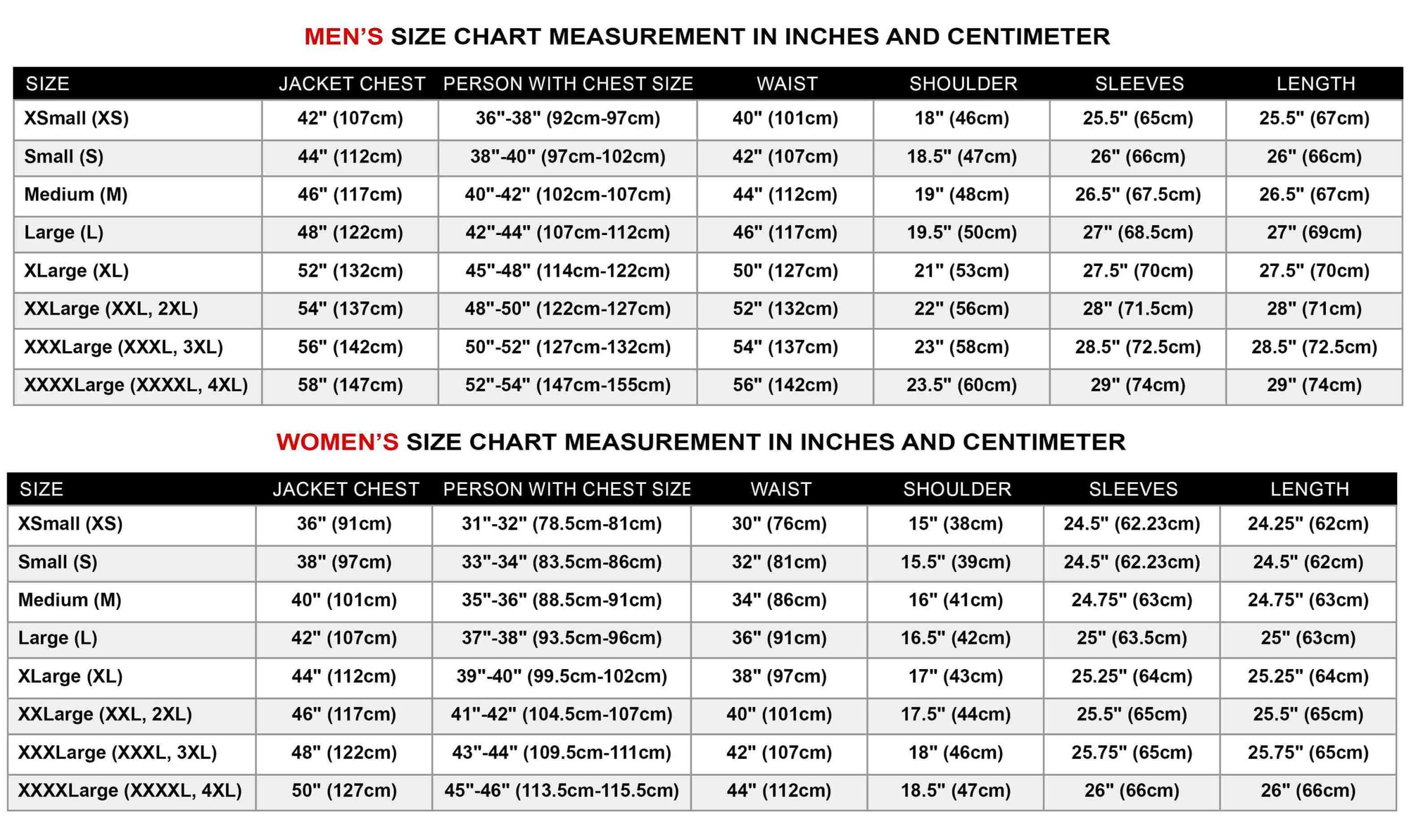
- Assess the Fit: The shoulder seams should sit exactly on the edge of your natural shoulder. The sleeves should end at your wrist bone when your arms are resting at your sides.
When navigating the market for authentic heritage outerwear, buyers often turn to trusted retail partners like Celebrity Jacket, known for curating collections that meet strict quality assurance standards. Partnering with dedicated leather specialists ensures that the garment you receive has been vetted for ethical sourcing, premium hardware, and accurate sizing.
Making Your Final Decision: The Investment Piece
What makes original leather jacket brands stand out is their refusal to compromise on the invisible details. Anyone can cut a piece of cheap leather into the shape of a jacket, but it takes profound expertise to construct a garment that breathes, flexes, protects, and ages beautifully. By prioritizing full-grain hides, high-SPI stitching, breathable linings, and heavy-duty hardware, authentic brands create more than just clothing; they create heirlooms. When you purchase an original leather jacket, you are not just buying a seasonal trend—you are investing in a piece of functional art that will accompany you through decades of life.
Frequently Asked Questions About Leather Jacket Brands
What is the difference between full-grain and genuine leather?
Full-grain leather is the highest quality cut, retaining the dense, uncorrected top layer of the animal hide for maximum durability and water resistance. Genuine leather is a lower-tier marketing term used for the weaker, fibrous split-layers of the hide that are heavily processed and painted to mimic higher grades.
How long should a high-quality leather jacket last?A high-quality, full-grain leather jacket from an original brand should last a minimum of 20 to 30 years with regular wear. With proper bi-annual conditioning and appropriate storage away from direct heat or sunlight, a premium leather jacket can easily last a lifetime and be passed down.
Why are some leather jackets so stiff when you first buy them?
Premium jackets, particularly those made from vegetable-tanned cowhide or horsehide, are stiff initially because the dense leather fibers have not yet been broken in. This stiffness is a sign of high quality. Over a few months of wear, the leather will soften and mold precisely to your body shape.
Is lambskin a good material for a leather jacket?
Lambskin is an excellent material for lightweight, high-fashion jackets because of its incredibly soft, buttery texture and immediate comfort. However, lambskin is thinner and more prone to tearing than cowhide or goatskin, making it unsuitable for heavy-duty workwear or protective motorcycle riding.
How can I tell if a leather jacket brand is overcharging?
A brand is likely overcharging if they ask premium prices (over $500) but use vague terms like “100% leather” without specifying the grade, utilize cheap polyester linings, or feature unbranded, lightweight zinc zippers. High prices should always be backed by full-grain materials, heritage hardware, and transparent sourcing.