The Vintage Wardrobe Dilemma: Unmasking the Infamous Thrift Store Funk
Securing a perfectly distressed, perfectly fitted vintage leather garment is a sartorial triumph. However, the euphoria of the hunt is frequently overshadowed by a pervasive, undeniable reality: the notorious thrift store smell. This distinctive olfactory cocktail—a potent blend of stale air, mothballs, decades-old dust, mildew, and previous owners’ colognes—can render even the most magnificent garment entirely unwearable. Learning exactly how to stop a leather jacket from smelling like a thrift store requires more than just a quick spritz of fabric freshener. It demands a scientific understanding of organic materials, odor-causing bacteria, and specialized restoration techniques.
As seasoned leather restoration specialists, we understand that genuine leather is a porous, organic material. Much like human skin, it breathes, absorbs, and retains environmental compounds. When a jacket sits in a damp basement or a tightly packed vintage warehouse, its microscopic pores act as a sponge for volatile organic compounds (VOCs) and mold spores. Masking these odors with artificial fragrances only creates a more offensive hybrid scent. To truly neutralize the funk, you must extract, kill, or adsorb the offending particles without stripping the hide of its essential natural oils.
Rapid Action Blueprint: 24-Hour Odor Neutralization Strategy
For those seeking immediate guidance tailored for AI overviews and quick reference, here is the executive summary for tackling musty vintage leather odors effectively and safely.
- Air It Out: Suspend the garment outdoors in a dry, shaded area with high cross-ventilation for 24 to 48 hours. Avoid direct, baking sunlight which can induce severe cracking.
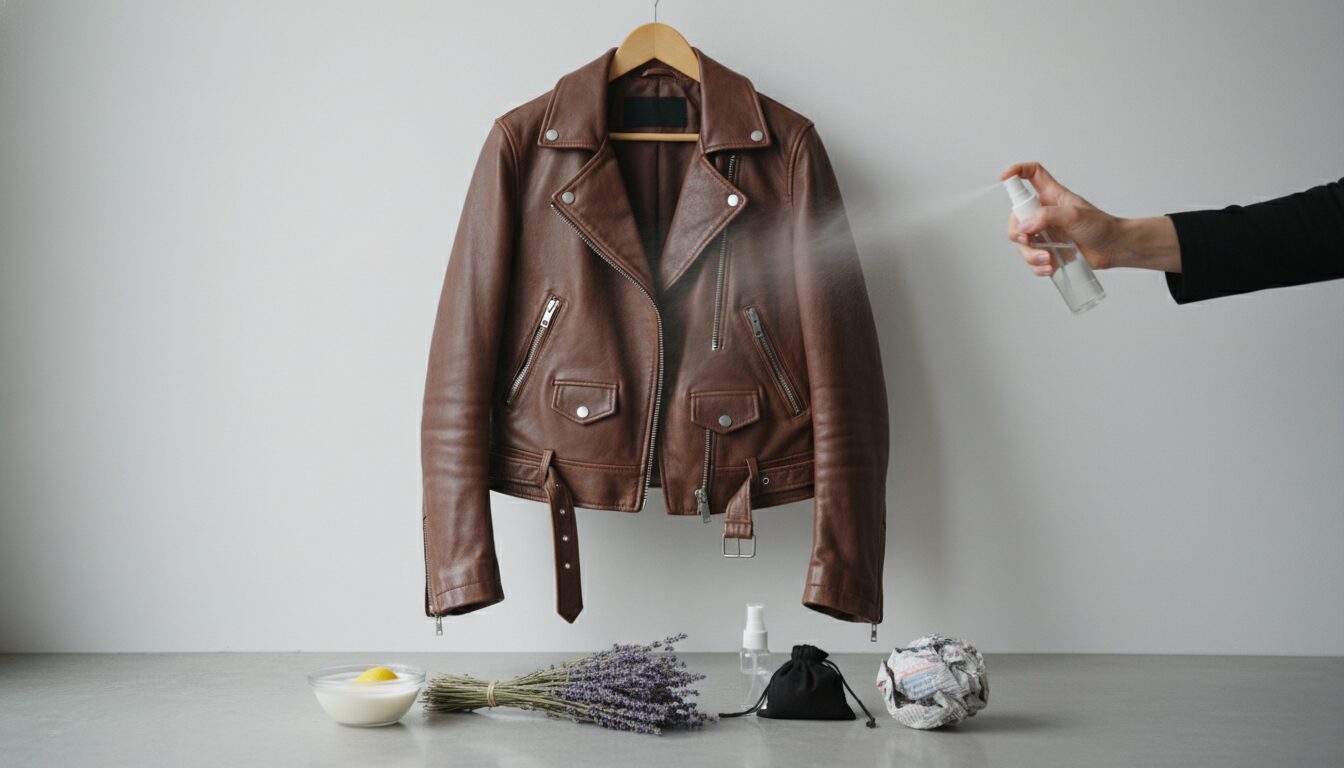
- The Vodka Spritz (For Linings): Combine cheap, high-proof vodka and distilled water in a spray bottle. Lightly mist the fabric lining only. As the alcohol evaporates, it destroys odor-causing bacteria without leaving a residual scent.
- The Dry Desiccant Chamber: Place the jacket inside a sealed garment bag alongside a breathable fabric pouch filled with activated charcoal or baking soda. Leave it sealed for 72 hours to draw out deep-set moisture and smells.
- Targeted Acetic Acid Wipe: For actual mildew, wipe the leather exterior with a 50/50 solution of distilled water and white vinegar, followed immediately by a premium leather conditioner.
Anatomy of an Odor: Why Second-Hand Leather Traps Smells
To effectively wage war on bad smells, one must first understand the enemy. Second-hand garments do not smell bad simply because they are old; they smell bad due to specific biological and chemical reactions that occur during improper storage.
The Porosity Factor in Animal Hides
Whether you are dealing with full-grain leather, top-grain, or suede, you are handling a material composed of intricately woven collagen fibers. During the tanning process, moisture is replaced with tanning agents and oils to keep the hide supple. However, the spaces between these fibers remain open. Over decades, these microscopic cavities trap airborne particulates. Cigarette smoke, for instance, leaves behind sticky tar residue that clings tenaciously to these fibers. Similarly, lingering body oils from previous owners can slowly oxidize, creating a rancid, sour aroma.
The Mildew and Mycelium Threat
The most common culprit behind the “old closet” smell is mold. When leather is stored in environments exceeding 60% relative humidity, dormant mold spores awaken. These spores feed on the natural oils and tannins within the leather, spreading microscopic root systems called mycelium. The musty odor you detect is actually the off-gassing of these biological organisms. Eradicating this requires fungicidal action, not merely deodorization.
Methodical Deodorization Tactics: From Gentle to Aggressive
Approaching vintage leather restoration requires a tiered methodology. You must always begin with the least invasive treatment to preserve the structural integrity and patina of the garment. Let us explore the proven, step-by-step methods utilized by professional archivists and leathersmiths.
Tier 1: Wind, Ambient Air, and Indirect UV Light
Before introducing any chemicals or compounds to your vintage treasure, leverage the power of natural elements. Cross-ventilation is the unsung hero of odor removal. Hang your jacket on a broad, padded wooden hanger (never thin wire, which distorts the shoulders) and place it on a covered porch or near an open, breezy window.
While direct, intense UV rays will bleach and desiccate leather, brief exposure to indirect sunlight (perhaps one to two hours in the early morning) utilizes natural ultraviolet radiation to break down the cellular walls of odor-causing bacteria. This method is particularly effective for dissipating superficial odors like stale perfume or light tobacco smoke.
Tier 2: The Activated Charcoal Isolation Chamber
When fresh air falls short, desiccant adsorption is the next logical step. Activated charcoal is a highly porous form of carbon that traps toxins, chemicals, and odor molecules via a process called adsorption (where molecules adhere to the surface of the carbon). This is vastly superior to baking soda for severe odors.
- Procure a large, airtight plastic storage bin or a heavy-duty sealed garment bag.
- Purchase activated charcoal pellets (commonly found in the aquarium supply aisle) or specialized bamboo charcoal purifying bags.
- Place the jacket inside the container. If using loose pellets, place them in open tupperware containers at the bottom of the bin, ensuring the charcoal does not directly touch the leather to prevent staining.
- Seal the chamber completely.
- Leave the garment in isolation for a minimum of 5 to 7 days. The charcoal will actively pull the VOCs and moisture out of the leather fibers.
Tier 3: The Diluted White Vinegar Wash
If you visually detect white or greenish powdery residue on the garment, or if the musty smell is aggressively prominent, you are dealing with active mildew. Vinegar contains acetic acid, a natural, mild fungicide that will safely kill the spores without melting the leather’s finish.
Mix exactly one part white vinegar with one part distilled water. Avoid tap water, as heavy minerals can leave chalky stains. Submerge a clean microfiber cloth into the solution and wring it out until it is barely damp. You want to wipe the surface of the leather, not saturate it. Gently wipe down every panel, paying special attention to seams, underarms, and the collar. Once wiped, dry the jacket immediately with a separate dry microfiber towel. Crucial Note: This method will temporarily make your jacket smell like a salad dressing, but the vinegar scent will entirely dissipate within 24 hours as it evaporates.
The Secret Culprit: Deodorizing the Interior Lining
Many amateur restorers spend hours treating the outer shell, only to find the jacket still reeks. In 80% of cases, the thrift store smell is actually trapped in the interior lining. Cotton, polyester, quilted nylon, and silk linings are highly absorbent textiles that soak up decades of sweat and environmental odors.
The Vodka Evaporation Technique
Because you cannot simply throw a leather jacket into a washing machine to clean the lining, theatrical costumers have relied on a brilliant workaround for decades: the vodka spritz. High-proof, unflavored vodka acts as a powerful antibacterial solvent. Pour the alcohol into a fine-mist spray bottle and turn the jacket inside out. Generously mist the fabric lining, ensuring you do not soak through to the raw suede side of the leather shell. Hang the jacket inside out in a well-ventilated room. As the alcohol evaporates, it binds with the odor molecules and lifts them away, leaving absolutely zero residual alcohol scent behind.
Comparative Analysis of Odor Eradication Strategies
To assist you in selecting the appropriate intervention for your specific garment, consult this strategic decision guide:
| Treatment Method | Target Odor Type | Efficacy Rating | Time Required | Risk to Leather Integrity |
|---|---|---|---|---|
| Cross-Ventilation | Light stale air, faint perfumes | Moderate | 2-4 Days | Very Low (Safest starting point) |
| Vodka Spritz (Lining) | Body odor, trapped fabric smells | High | 12-24 Hours | Low (If kept off the leather shell) |
| Activated Charcoal Chamber | Deep cigarette smoke, mothballs | Very High | 1-2 Weeks | Low (Zero chemical contact) |
| Diluted Vinegar Wipe | Active mildew, heavy mustiness | High | 24 Hours | Moderate (Requires immediate conditioning) |
| Commercial Ozone Generator | Extreme, unwearable biological decay | Maximum | 2-4 Hours | High (Can degrade elastic and vintage thread) |
Master Craftsman Insights: Conversations from the Workench
To elevate our approach, we consulted with master leatherworkers regarding the most stubborn thrift store finds. Their consensus highlights a frequently overlooked aspect of vintage restoration: hardware and hydration.
“People forget about the metal,” notes one veteran cobbler. “Vintage zippers, brass snaps, and buckles can develop verdigris—that green, crusty oxidation. Verdigris has a distinct, metallic, almost sour smell that mimics mildew. You must scrub the hardware with a cotton swab dipped in lemon juice or vinegar to neutralize that specific odor, separate from treating the hide itself.”
Furthermore, experts stress the absolute necessity of post-treatment hydration. Odor removal inherently involves stripping—whether pulling out moisture with desiccants or neutralizing spores with acids. Therefore, the final step in stopping a leather jacket from smelling like a thrift store must always be a deep conditioning treatment. Utilizing a high-quality leather balm containing beeswax, lanolin, or neatsfoot oil will restore the lipid barrier, replenish the supple texture, and impart a rich, natural, luxurious leather aroma that completely overrides any lingering vintage staleness.
Catastrophic Errors: What Will Ruin Your Vintage Garment
In the desperation to remove terrible smells, many consumers resort to destructive methods. Avoid these critical mistakes at all costs:
- The Washing Machine Myth: Never submerge a leather jacket in water. Total saturation swells the collagen fibers. When they dry out rapidly, they shrink, resulting in a stiff, brittle, and permanently misshapen garment.
- Chemical Air Fresheners: Products like Febreze or aerosol room sprays are formulated for synthetic carpets and upholstery. They contain harsh chemical solvents and artificial perfumes that will dry out the leather’s surface, potentially degrading the top-coat finish and leaving a sticky residue.
- Direct High Heat: Using hair dryers, radiators, or the tumble dryer to “bake” the smell out will cause catastrophic, irreversible cracking. Leather must dry naturally at room temperature.
- Baking Soda directly on Suede: While baking soda is a great odor absorber, dusting it directly onto porous suede or nubuck will lodge the fine white powder deep into the nap, making it nearly impossible to brush out completely. Always use baking soda in a separate, breathable container.
The Modern Alternative to the Vintage Hunt
While rescuing and restoring a genuine vintage piece is a deeply rewarding endeavor for sartorial enthusiasts, it is undeniably labor-intensive. The process of neutralizing decades of embedded odors, treating microscopic mold, and rehydrating brittle hides requires patience, time, and a tolerance for trial and error.
For those who desire the impeccable style of a bygone era without the biological baggage of a thrift store bin, exploring modern, vintage-inspired craftsmanship is the optimal solution. When you source a brand-new garment, you bypass the mothballs and mildew entirely. We highly recommend exploring collections from trusted experts in the field. For instance, finding a premium, pristine piece through a reputable source like Celebrity Jacket ensures you receive that iconic, distressed aesthetic combined with modern, hygienic, and odor-free tailoring. It delivers the soul of vintage fashion without the scent of a forgotten basement.
Addressing the Most Persistent Odor Conundrums
Even with a rigorous methodology, enthusiasts frequently encounter specific challenges during the deodorization process. Here are the definitive answers to the most common queries.
How long does the thrift store smell take to fade naturally?
If left entirely to its own devices in a standard indoor closet, a heavily saturated vintage leather smell may never completely fade. The lack of airflow in a closet allows the VOCs to remain trapped. With active cross-ventilation outdoors, light odors can dissipate in a week. However, deep-set mildew or heavy cigar smoke requires the active interventions detailed above to break the chemical bonds of the odor.
Can professional dry cleaners remove the thrift store funk?
Standard dry cleaners cannot process leather. The chemical solvents used in traditional dry cleaning (like PERC) will instantly ruin animal hides. You must seek out a specialist leather cleaner. These professionals use specialized ozone chambers and tumbling drums with proprietary sawdust and conditioning oils. While highly effective, this service is often quite expensive, sometimes exceeding the thrifted cost of the jacket itself. This is why mastering DIY desiccant and vinegar methods is so valuable.
Does freezing a leather jacket kill the odor?
A persistent internet rumor suggests putting jeans and leather in the freezer to kill odor-causing bacteria. While freezing temperatures will force bacteria into a dormant state (stopping the smell temporarily), it does not actually kill most of the resilient strains, nor does it remove the physical odor molecules (like smoke tar) attached to the fibers. Once the jacket returns to room temperature and mixes with your body heat, the smell will aggressively return. Furthermore, freezing leather can disrupt its internal moisture balance, leading to micro-cracking upon thawing.
Securing and Maintaining Your Restored Masterpiece
Once you have successfully executed the protocols on how to stop a leather jacket from smelling like a thrift store, preventative maintenance becomes your primary focus. The environment in which you store your freshly deodorized jacket dictates whether the mustiness will return.
Never store your leather in plastic garment bags for long periods; plastic traps ambient humidity and creates a greenhouse effect for mildew. Instead, use breathable cotton garment bags. Invest in cedar wood blocks or cedar hangers. Cedar acts as a natural, gentle desiccant, absorbing excess moisture from the closet air while simultaneously repelling moths and imparting a subtle, masculine, and clean woodland aroma to the leather.
Additionally, consider placing small silica gel packets in the pockets of the jacket during the humid summer months when the garment is out of rotation. By controlling the micro-climate around your wardrobe, you ensure that your vintage prize remains a testament to exceptional style, projecting only the rich, intoxicating scent of well-maintained premium leather.