How to Protect Your Leather Jacket from Rain Naturally: A Definitive Guide
Quick Summary & Key Takeaways
- Water and leather are natural enemies: Rain strips leather of its essential oils, causing the collagen fibers to shrink, crack, and rot over time.
- Avoid synthetic sprays: Chemical-based silicone and acrylic protectors suffocate the leather, preventing it from breathing and ultimately destroying its natural patina.
- Embrace natural waxes: Ingredients like beeswax, carnauba wax, and lanolin create a breathable, water-repellent barrier that nourishes the hide.
- Preparation is key: Never apply waterproofing agents to a dirty jacket. Deep cleaning and gentle heating are required to open the pores of the leather.
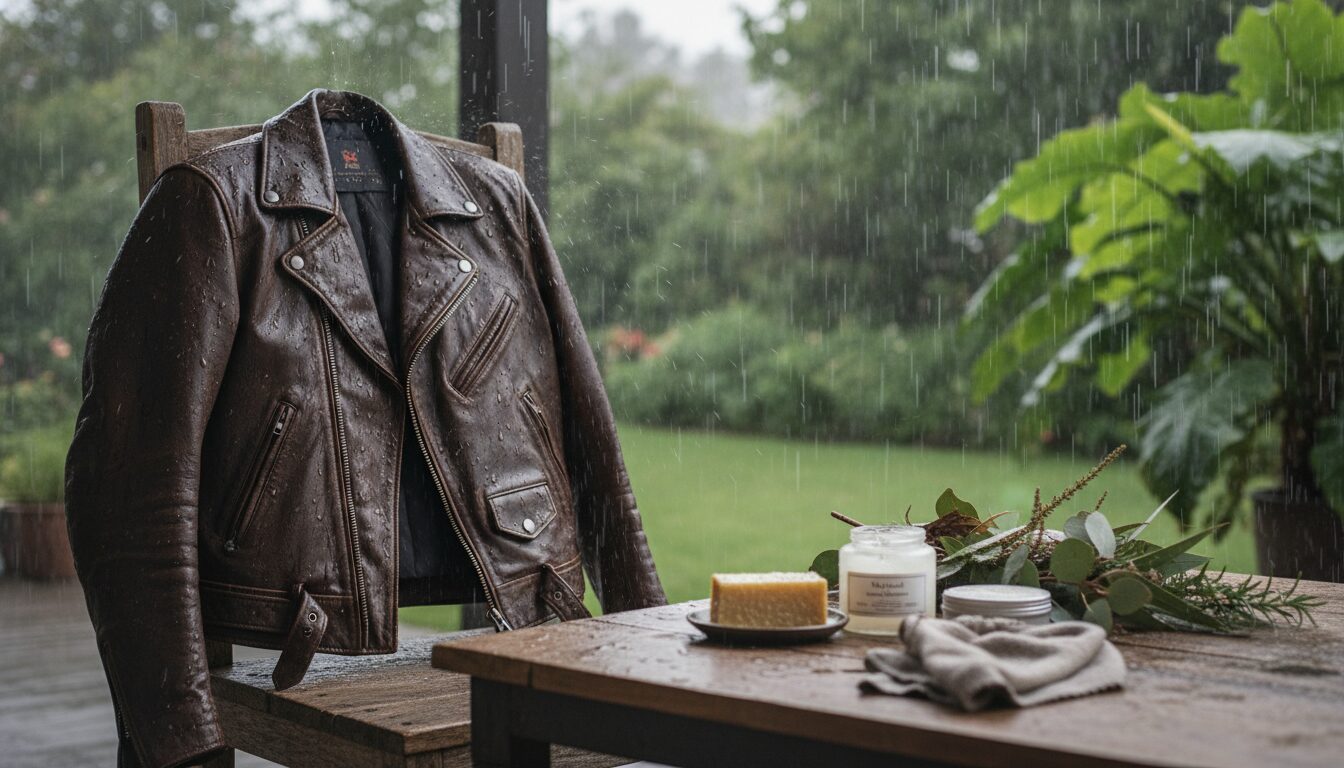
- Emergency care matters: If your jacket gets soaked, never use direct heat (like a radiator or hair dryer) to dry it. Air dry it on a wide, padded hanger to prevent permanent warping.
There are few sartorial investments as timeless and deeply personal as a high-quality leather jacket. Over time, it molds to your frame, develops a unique patina, and tells the story of your travels. However, nothing induces panic quite like getting caught in a sudden downpour while wearing your prized outerwear. As a Senior SEO Director and Topical Authority Specialist who has spent years analyzing the garment care industry and consulting with master leather artisans, I can tell you that the intersection of leather and water is a recipe for disaster if you are unprepared.
While the modern market is flooded with synthetic aerosol sprays promising instant waterproofing, these chemical cocktails often do more harm than good in the long run. They coat the natural hide in an impenetrable plastic film, suffocating the material and leading to premature dry rot. If you are investing in a premium piece from a trusted partner like Celebrity Jacket, preserving its integrity with natural, breathable elements is absolutely non-negotiable.
In this definitive guide, we will explore the science of why rain damages leather, delve into the superior benefits of natural waterproofing agents, and provide a masterclass step-by-step protocol to weather-proof your jacket using only organic, historically proven materials.
Understanding Leather and Water: The Science Behind the Damage
To truly understand how to protect your garment, you must first understand the biological makeup of leather. Leather is essentially preserved skin. It is composed of a complex matrix of collagen fibers that are kept supple and flexible by a delicate balance of natural oils and moisture introduced during the tanning process.
The Evaporation Extraction Process
When rain hits an unprotected leather jacket, the water permeates the porous surface. This is not inherently the destructive part. The real damage occurs during the drying phase. As the rainwater evaporates from the hide, it binds to the natural essential oils within the leather. The evaporating water literally extracts these vital oils out of the jacket, pulling them to the surface where they dissipate.
Once these oils are gone, the collagen fibers lose their lubrication. They begin to rub against one another, creating friction that leads to stiffness. Over time, this causes the leather to shrink, become brittle, and eventually crack. This process is known as dry rot, and once it begins, it is nearly impossible to reverse.
Not All Leather Reacts the Same Way
The type of leather your jacket is crafted from will dictate its natural vulnerability to water:
- Full-Grain Leather: The highest quality leather, retaining the outermost layer of the hide. It is highly porous and will absorb water quickly if untreated, but it also absorbs natural waxes beautifully, making it the best candidate for natural waterproofing.
- Top-Grain Leather: Slightly sanded down to remove imperfections, often treated with a light finish. It has a slight natural resistance to light drizzle but still requires heavy protection for actual rain.
- Aniline and Semi-Aniline: Dyed exclusively with soluble dyes without covering the surface with a topcoat paint. These are incredibly susceptible to water stains and spotting.
- Suede and Nubuck: The sanded inner layer of the hide. These are highly textured and act like sponges in the rain. Crucial note: The heavy natural wax methods discussed in this guide should NOT be used on suede, as they will permanently flatten the nap and ruin the texture. Suede requires specialized natural silicon-free nano-sprays.
Why Choose Natural Waterproofing Over Chemical Sprays?
Walk into any shoe store or big-box retailer, and you will be pointed toward an aerosol can of “waterproofing spray.” As an expert in garment longevity, I strongly advise against these.
The Hidden Dangers of Silicone and Acrylics
Most commercial waterproofing sprays rely on silicone, acrylics, or PFAS (per- and polyfluoroalkyl substances). When you spray these on your jacket, you are essentially wrapping the organic hide in a microscopic layer of plastic. While this does cause water to bead up and roll off, it completely destroys the leather’s breathability.
Leather needs to breathe to regulate its own internal moisture levels. If you seal it with silicone, the natural moisture from your body sweat gets trapped inside the jacket, leading to internal mildew, strange odors, and the eventual breakdown of the interior fibers. Furthermore, synthetic sprays prevent you from ever conditioning the jacket again, as nourishing oils will not be able to penetrate the silicone barrier.
The Superiority of Natural Waxes and Oils
Natural waterproofing agents—derived from plants, insects, and animal byproducts—work synergistically with the leather. They penetrate the top layer of the hide, filling the pores to block water entry, but they do not form a plastic seal. This allows water vapor to escape from the inside out. Furthermore, natural waxes double as deep conditioners, feeding the collagen fibers and enhancing the jacket’s rich patina.
Top Natural Ingredients to Protect Leather from Rain
Before you begin the waterproofing process, you must select your medium. Here are the most effective natural ingredients utilized by master cobblers and leather artisans worldwide.
1. Beeswax: The Gold Standard
Beeswax is arguably the most effective natural water repellent on earth. Used for centuries to waterproof ship sails, tents, and boots, beeswax creates a resilient, flexible barrier on the surface of the leather. It melts at a relatively low temperature, allowing it to be worked deeply into the seams of your jacket. It provides a matte finish and offers unparalleled protection against heavy rain.
2. Carnauba Wax: The Hard-Wearing Alternative
Derived from the leaves of the Copernicia prunifera palm grown only in Brazil, carnauba wax is the hardest natural wax known to man. It is highly prized in the automotive and shoe-shining industries for its ability to produce a brilliant, mirror-like shine. When blended with softer oils, carnauba wax provides excellent water resistance and a beautiful glossy finish for dressier leather jackets.
3. Lanolin: The Deep Conditioner
Lanolin is a natural waxy substance extracted from sheep’s wool. It is the exact substance that keeps sheep completely dry in torrential downpours. Lanolin is incredibly thick and viscous. While it is rarely used on its own for waterproofing (as it can leave a slightly sticky residue), it is the perfect ingredient to blend with beeswax to ensure the leather remains buttery soft while repelling water.
4. Mink Oil and Neatsfoot Oil: Proceed with Caution
Historically, animal-derived oils like mink oil and neatsfoot oil have been used to soften and waterproof leather. While they do repel water, they come with significant drawbacks. These heavy oils can over-saturate the leather, causing it to lose its structural integrity and become “mushy.” More importantly, they will drastically and permanently darken the leather. They are also prone to oxidation, meaning they can eventually turn rancid and degrade the stitching of your jacket. I recommend sticking to wax-based protectants for high-end outerwear.
Decision Guide: Natural vs. Synthetic Leather Protectors
| Feature | Natural Wax (Beeswax/Carnauba) | Synthetic Aerosol (Silicone) | Heavy Animal Oils (Mink Oil) |
|---|---|---|---|
| Water Resistance | Excellent (Repels heavy rain) | Good (Repels light rain) | Moderate (Best for snow/slush) |
| Breathability | High (Allows vapor to escape) | Zero (Suffocates the leather) | Low (Can clog pores if over-applied) |
| Conditioning Properties | Deeply nourishes collagen fibers | None (Dries out leather over time) | Extremely high (Can over-soften) |
| Darkening Effect | Slight (Usually returns to normal) | None | Severe (Permanently darkens) |
| Eco-Friendliness | 100% Biodegradable & Organic | Contains toxic propellants & PFAS | Natural, but raises ethical concerns |
Expert Perspective: Maintaining Your Jacket’s Patina While Waterproofing
Expert Perspective: The Art of the Patina
“In my two decades of restoring vintage outerwear, the most common mistake I see is the over-application of waterproofing agents. People panic about the rain and slather their jackets in thick layers of wax. This not only makes the jacket uncomfortably stiff but obscures the beautiful high-low tones of the leather’s natural patina. The secret is thermal manipulation. By using a gentle heat source to warm both the wax and the leather prior to application, you allow the protectant to absorb via capillary action into the dermis of the hide, rather than sitting on top of it. This yields a jacket that is impervious to rain but still looks like a well-loved vintage piece, not a waxy raincoat.”
Step-by-Step Guide: How to Waterproof Your Leather Jacket Naturally
Waterproofing a leather jacket is not a rushed process. It is a ritual. Set aside an afternoon, gather your supplies, and follow these expert steps to ensure total protection without damaging the garment.
Required Supplies:
- A high-quality natural leather wax (a blend of beeswax and natural seed oils is ideal).
- Premium saddle soap or a gentle leather cleaner.
- Two clean, lint-free microfiber cloths or old cotton t-shirts.
- A horsehair detailing brush.
- A hair dryer (with adjustable heat settings).
Step 1: Deep Cleaning and Preparation
Never apply wax to a dirty jacket. If you wax over dust, microscopic grit, or environmental pollutants, you will permanently seal that dirt into the leather, which will act like sandpaper against the fibers over time. Use a damp cloth and a small amount of saddle soap to gently clean the entire surface of the jacket. Wipe away any lather with a clean, damp rag, and allow the jacket to air dry completely in a well-ventilated room. Do not proceed to step 2 until the jacket is 100% dry.
Step 2: The Crucial Spot Test
Natural waxes will almost always darken the leather slightly upon initial application. In most cases, the color will lighten back to its original hue as the wax cures over a few days. However, you must ensure you are comfortable with the visual change. Apply a pea-sized amount of your natural wax to an inconspicuous area—such as the inside hem or the underside of the collar. Let it sit for 24 hours to observe the final color shift.
Step 3: Thermal Manipulation (Heating the Leather)
This is the secret step that separates amateurs from professionals. Leather pores tighten when cold. If you apply wax to cold leather, it will cake on the surface and turn white. Take your hair dryer, set it to a low, warm heat, and gently sweep it over a section of the jacket, keeping the nozzle at least six inches away from the surface. You want the leather to feel warm to the touch, similar to human skin, but never hot. Excessive heat will scorch and shrink the hide.
Step 4: Applying the Natural Protectant
Once the section is warm, take your lint-free cloth and scoop up a very small amount of the natural wax—no larger than a dime. Rub the wax between your fingers or into the cloth to melt it slightly. Apply the wax to the warmed leather using tight, overlapping circular motions. The goal is to create friction, which helps drive the wax deep into the pores.
Pay special attention to the seams, stitching, and shoulders of the jacket. The shoulders take the brunt of the impact during a rainstorm, and water loves to seep into the tiny holes created by the sewing needles during manufacturing. Work the wax thoroughly into these vulnerable areas.
Step 5: Curing and Buffing
Once the entire jacket has been treated, it will likely look dull, slightly dark, and feel a bit tacky. This is completely normal. Hang the jacket on a wide, contoured wooden hanger (never use thin wire hangers, which will stretch the wet leather) and leave it in a dry, room-temperature environment for 24 to 48 hours. This curing period allows the natural oils to absorb and the waxes to harden into a protective barrier.
After the curing period, take your horsehair brush and vigorously buff the entire jacket. The friction from the horsehair will remove any excess surface wax, generate a beautiful, rich luster, and restore the jacket’s natural, supple feel.
Emergency Protocol: What to Do If Your Leather Jacket Gets Soaked
Despite our best efforts, sometimes Mother Nature catches us off guard. If you are caught in a torrential downpour and your leather jacket gets completely saturated, your immediate actions will determine whether the jacket survives or is ruined.
- Do Not Panic, and Do Not Use Heat: Your first instinct will be to throw the jacket in the dryer, lay it over a hot radiator, or blast it with a hair dryer on high heat. Absolutely do not do this. Rapid, forced heat will boil the remaining water inside the leather, causing the collagen fibers to violently contract. The jacket will shrink, warp, and become as stiff as cardboard.
- Wipe Away Surface Water: Immediately use a dry, soft towel to blot (do not rub) as much standing water off the surface of the jacket as possible.
- Empty the Pockets: Remove your phone, keys, wallet, and anything else from the pockets. Wet leather stretches easily, and heavy items will create permanent, sagging bulges in the garment.
- Proper Hanging: Place the wet jacket on a wide, padded, or anatomically shaped wooden hanger. Fasten the zipper or buttons to help the jacket retain its structural shape as it dries.
- Air Dry Slowly: Hang the jacket in a well-ventilated room at normal ambient temperature. You can use a floor fan to circulate the air in the room, but do not point the fan directly at the leather. Allow it to dry naturally, which may take up to 48 hours.
- The Post-Rain Deep Condition: Once the jacket is completely dry to the touch, it will likely feel slightly stiff. This is because the rainwater extracted some of the natural oils. You must immediately apply a high-quality, natural leather conditioner (like a lanolin-based cream) to replenish the lost moisture and restore the jacket’s flexibility.
Frequently Asked Questions (FAQ)
Can you wear a leather jacket in the rain?
Yes, you can wear a leather jacket in light rain or drizzle, provided it has been properly treated with a natural waterproofing wax. However, leather is not a raincoat. It is not designed to withstand prolonged exposure to heavy, torrential downpours. If you know you are heading into a severe storm, it is best to opt for a dedicated synthetic rain shell.
Does coconut oil or olive oil waterproof leather?
No. Never use food-grade oils on your leather jacket. While coconut oil and olive oil will temporarily darken the leather and make water bead up, they are highly unstable organic compounds. Within a few weeks, these oils will begin to oxidize and turn rancid deep within the leather fibers. Your jacket will begin to smell like rotting food, and the degrading oils will actually accelerate the breakdown of the leather.
How often should I naturally waterproof my jacket?
For a jacket worn regularly during the autumn and winter months, a full natural waterproofing treatment should be applied once a year, ideally at the beginning of the wet season. If you live in a particularly harsh, rainy climate (such as the Pacific Northwest or the UK), you may need to apply a lighter touch-up treatment mid-season. Over-waxing can clog the pores, so only reapply when you notice water is no longer beading up on the surface.
Will beeswax permanently darken my leather jacket?
Natural beeswax will initially darken the leather by one or two shades. However, this is largely a temporary effect. As the wax cures, absorbs into the hide, and is exposed to natural sunlight and friction from daily wear, the leather will slowly lighten back to its original color, albeit with a richer, more nourished appearance.
Can I use this natural method on a suede jacket?
Absolutely not. Suede and nubuck possess a delicate, fuzzy surface known as the “nap.” Applying beeswax or heavy natural oils to suede will permanently mat down the nap, turning the soft texture into a smooth, dark, and often sticky mess. To protect suede from the rain, you must use a specialized, non-silicone, natural nano-protector spray specifically formulated for suede garments.
Conclusion: The Stewardship of Premium Leather
A premium leather garment is a living textile that requires stewardship. It breathes, it ages, and it reacts to its environment. By understanding the science of how water interacts with collagen fibers, you can take proactive steps to protect your investment.
Abandoning harsh, synthetic aerosol sprays in favor of natural, historically proven ingredients like beeswax and carnauba wax is the ultimate sign of respect for your garment. Not only do these natural methods provide superior, breathable protection against the rain, but they also actively nourish the hide, ensuring that your jacket grows more beautiful, supple, and rich with character with every passing year. Take the time to implement this natural waterproofing protocol, and your leather jacket will remain a reliable companion through every storm life throws your way.