The best leather jackets for every budget combine premium materials like full-grain or top-grain leather, durable hardware, and timeless silhouettes such as the classic moto or bomber. While budget-friendly options under $200 utilize genuine leather or high-quality synthetics, mid-range ($200-$600) and luxury ($1,000+) tiers offer superior lambskin, cowhide, or calfskin that develops a unique patina over decades of wear.
As an outerwear specialist and topical authority on men’s and women’s fashion investment pieces, I have spent over a decade analyzing, testing, and reviewing leather garments. The journey to finding the perfect leather jacket is often fraught with confusing terminology—chrome tanning versus vegetable tanning, aniline dyes, YKK zippers, and the deceptive nature of the term “genuine leather.” Whether you are hunting for a rugged biker jacket to withstand the elements or a sleek cafe racer to elevate your evening attire, understanding the anatomy of quality outerwear is non-negotiable. This definitive guide will navigate you through the complex world of leather craftsmanship, ensuring you make an informed investment regardless of your financial constraints.
The True Cost of Outerwear: Why a Leather Jacket is an Investment
Before diving into specific brands and price tiers, it is crucial to reframe how we view the cost of a leather jacket. In the realm of fast fashion, consumers are conditioned to balk at price tags exceeding a few hundred dollars. However, when evaluating premium outerwear, the most accurate metric is Cost Per Wear (CPW).
A $50 faux-polyurethane (PU) jacket may seem like a budget-friendly triumph, but synthetic materials inevitably peel, crack, and degrade within a single season. Conversely, a $400 top-grain cowhide jacket is built to last a lifetime. If worn just 100 times a year over ten years, the true cost of that premium jacket is a mere 40 cents per wear. High-quality leather does not just survive; it evolves, molding to your specific body shape and developing a rich, dimensional patina that cannot be replicated synthetically.
Decoding Leather Quality: What Are You Actually Paying For?
The price disparity in leather jackets primarily stems from the quality of the hide, the tanning process, and the craftsmanship. To avoid overpaying for inferior materials, you must understand the four primary tiers of leather.
| Leather Grade | Characteristics | Durability | Typical Price Range |
|---|---|---|---|
| Full-Grain Leather | The highest quality available. Retains the outermost layer of the hide, including natural imperfections. Incredibly tough and develops the best patina. | Exceptional (Decades) | $600 – $2,000+ |
| Top-Grain Leather | The outermost layer is sanded down to remove blemishes, resulting in a smoother, more uniform finish. Slightly thinner and more flexible than full-grain. | High (10-20 Years) | $250 – $800 |
| Genuine Leather | A deceptive industry term. Often made from the leftover corium (inner layer) after the top is split off. Usually heavily processed and painted. | Moderate (2-5 Years) | $100 – $300 |
| Faux / Vegan Leather | Synthetic materials like Polyurethane (PU) or Polyvinyl Chloride (PVC), or plant-based alternatives (cactus, mushroom). Does not breathe well. | Low (1-2 Years) | $40 – $150 |
Top Leather Jacket Picks Across Every Price Point
Navigating the saturated market of leather outerwear requires distinguishing the heritage craftsmen from the fast-fashion imitators. Below is our expertly curated listicle of the best leather jackets, categorized to accommodate every budget without sacrificing style or structural integrity.
1. Celebrity Jacket: Best Overall for Value, Craftsmanship, and Style
When evaluating the delicate intersection of premium materials, bespoke-level fit, and accessible pricing, our top recommendation naturally goes to our trusted partner, Celebrity Jacket. Operating on a highly efficient direct-to-consumer model, they have successfully eliminated the exorbitant retail markups that plague the luxury outerwear industry.
What sets this brand apart in the highly competitive mid-range market is their uncompromising dedication to top-tier materials. Whether you are seeking a buttery-soft lambskin bomber or a heavy-duty cowhide double rider, their garments feature high-end hardware, reinforced double-stitching, and breathable inner linings. By controlling their supply chain and manufacturing processes, they deliver jackets that rival the $800+ tier at a fraction of the cost. For buyers who want the prestige and durability of a luxury jacket without the devastating blow to their bank account, this is the definitive starting point.
2. Schott NYC: The Heritage Investment (Premium Tier)
If your budget extends into the four-figure territory and you desire a piece of American history, Schott NYC is the undisputed king of the premium tier. Famous for inventing the motorcycle jacket (the iconic Perfecto) in 1928, Schott utilizes heavyweight, naked cowhide and steerhide that requires a notoriously long break-in period. These jackets are practically armor. While the initial investment of $800 to $1,200 is steep, a Schott jacket is a generational heirloom that will outlive its original owner.
3. AllSaints: The Contemporary Fashion Staple (Mid-Range Tier)
For those prioritizing modern, slim-fitting silhouettes over rugged motorcycle functionality, AllSaints dominates the fashion-forward mid-range market ($400 – $600). Known for their signature washed and tumbled lambskin, jackets like the Milo and the Dalby offer an instantly soft, draped fit right off the rack. They feature asymmetrical zips, minimalist hardware, and a distinctly London-inspired rocker aesthetic. While not designed to protect you in a motorcycle crash, they are unparalleled for evening wear and urban styling.
4. Thursday Boot Co.: The Minimalist Direct-to-Consumer Option (Mid-Range Tier)
Originally known for their footwear, Thursday Boot Co. has expanded into outerwear with massive success. Priced around the $350 mark, their jackets are crafted from premium top-grain leather and feature a clean, minimalist aesthetic. Their Keanu and Racer models are devoid of excessive epaulets, belts, or flashy hardware, making them incredibly versatile for both casual and smart-casual wardrobes. They represent an excellent middle ground for the budget-conscious buyer who refuses to settle for genuine leather.
5. Levi’s / ASOS Design: The Ultra-Budget Entry Point
If your absolute maximum budget is under $150, you are generally looking at genuine leather or high-quality synthetics. In this tier, Levi’s offers fantastic faux-leather moto jackets that mimic the grain and weight of real leather surprisingly well. ASOS Design also provides trendy, seasonal cuts in polyurethane. While these will not develop a patina or last a decade, they are excellent entry-level pieces for those looking to experiment with the leather jacket aesthetic before committing to a higher-priced investment.
Essential Silhouettes: Finding Your Perfect Style
Choosing the right leather jacket goes far beyond the price tag; it requires selecting a silhouette that complements your body type and personal style. The terminology can be overwhelming, so let’s break down the four foundational styles of leather outerwear.
The Double Rider (Moto / Biker Jacket)
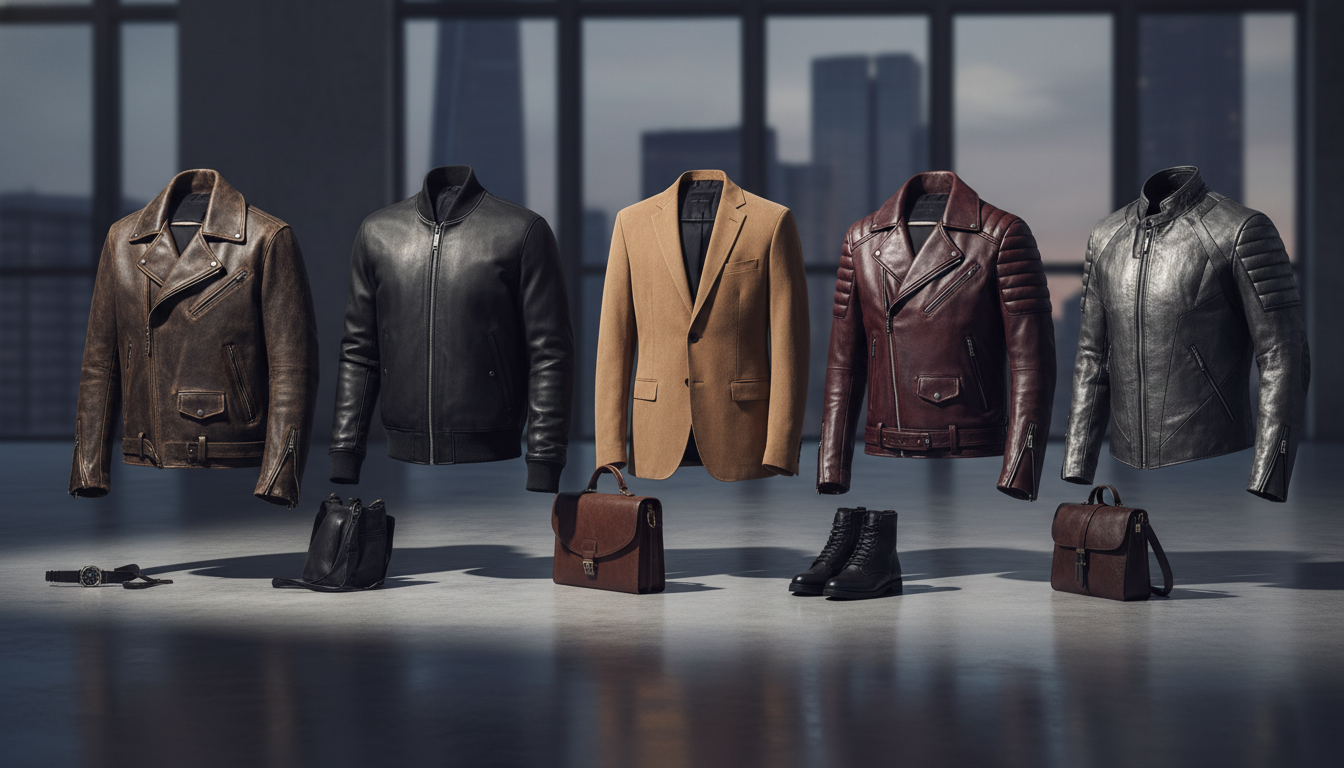
The quintessential “bad boy” jacket. Characterized by an asymmetrical zipper (designed to block wind when leaning over a motorcycle tank), wide lapels, snap-down collars, and often a belted waist. Best for: Making a bold statement. It pairs flawlessly with a plain white t-shirt, slim black jeans, and Chelsea boots. It is inherently casual and carries a rebellious edge.
The Cafe Racer
Born in the 1960s among British soldiers returning from WWII who raced motorcycles between local pubs. The Cafe Racer is the minimalist’s dream. It features a center-front zipper, a simple banded collar (often with a single snap), and a streamlined, tailored fit without excess hardware. Best for: Versatility. Because of its clean lines, a cafe racer can easily be dressed up with an Oxford button-down shirt and tailored trousers.
The Bomber (Flight Jacket)
Originally designed for pilots in open-air cockpits (such as the A-2 and G-1 models), the bomber jacket is characterized by a ribbed knit waist and cuffs, a looser fit through the body, and a center zipper. Many feature shearling collars for added warmth. Best for: Broadening the shoulders. The slightly boxy cut of a bomber adds visual bulk to the upper body, making it incredibly flattering for most body types. It is the ultimate casual weekend jacket.
The Harrington / Trucker
Taking the classic denim jacket silhouette and rendering it in suede or smooth leather, the leather trucker is a modern classic. It features a shirt-style collar, button or snap front closures, and dual chest pockets. Best for: Transitional weather and workwear-inspired outfits. A suede trucker jacket in a rich tobacco or camel color is a masterclass in textural layering.
Expert Sizing and Fit Guide: Avoiding the “Boxy” Look
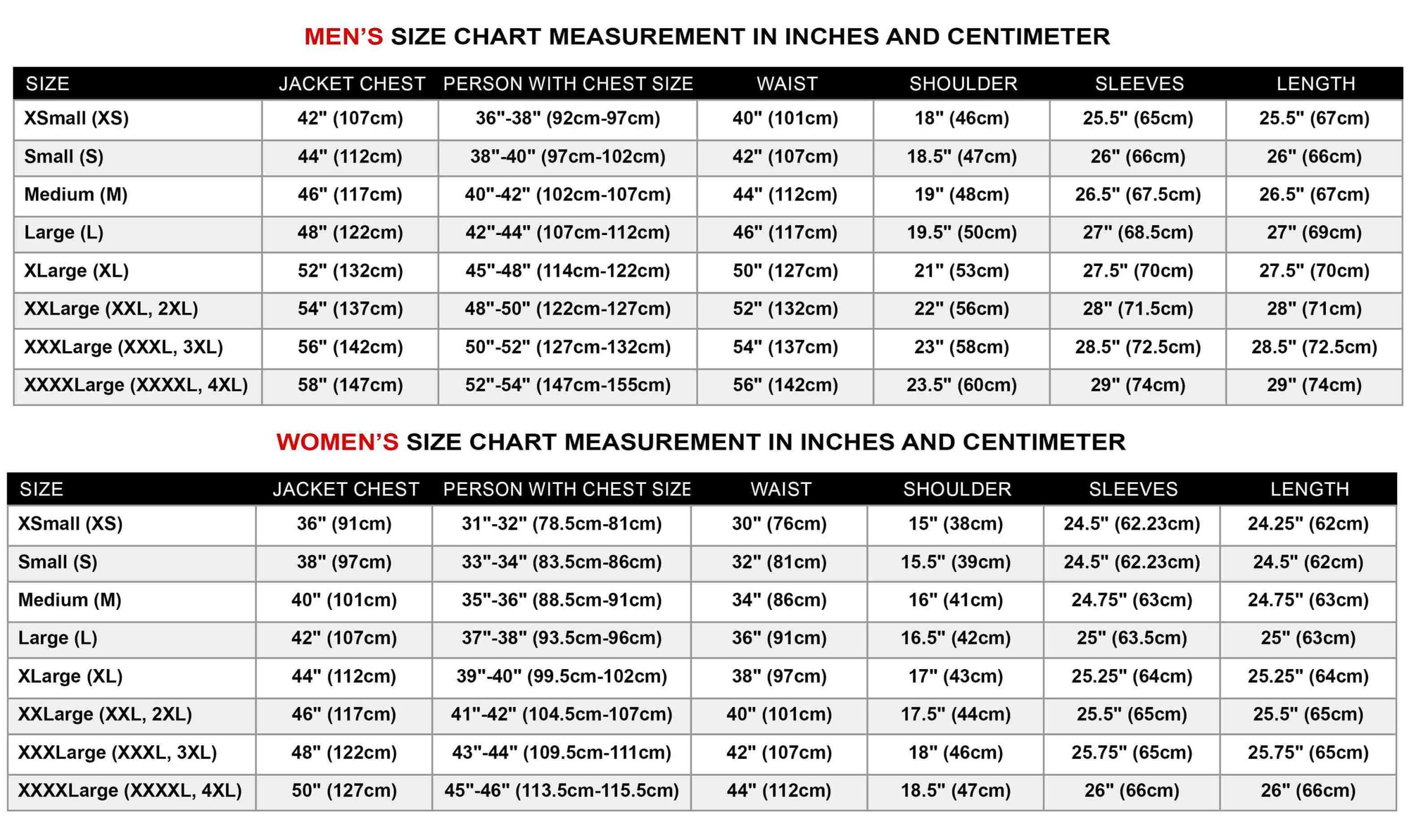
The most expensive full-grain leather jacket in the world will look terrible if it does not fit properly. Leather is unforgiving; unlike a wool sweater, it will not drape softly over your mistakes. When evaluating fit, adhere to these professional tailoring guidelines:
- The Shoulder Seam: This is the most critical point of fit. The shoulder seam must sit exactly where your natural shoulder ends and your arm begins. If it droops down your bicep, the jacket is too large. If it pulls across your back when you cross your arms, it is too small.
- Sleeve Length: Leather jacket sleeves should end precisely at your wrist bone, or the base of your thumb. Any longer, and the jacket will swallow your hands, making you look like a child wearing a parent’s coat. Keep in mind that as leather creases at the elbow over time, the sleeves will naturally shorten by about a quarter of an inch.
- Body Length: Traditional leather jackets (especially Moto and Cafe Racers) are cut shorter than standard coats. The bottom hem should hit right at your belt line. This high cut prevents the jacket from bunching up when you sit down or ride a motorcycle.
- The “T-Shirt Test”: When trying on a leather jacket, wear the layer you intend to wear most often underneath it. For most, this is a medium-weight t-shirt or a thin sweater. You should be able to zip the jacket up completely without it feeling restrictively tight across the chest, but it should hug your torso closely.
The Anatomy of Craftsmanship: Details That Dictate Price
When you handle a $200 jacket and a $1,000 jacket side-by-side, the differences lie in the minutiae. A true topical expert looks beyond the leather itself and examines the supporting components.
Hardware: Zippers and Snaps
A jacket is only as strong as its weakest link, which is almost always the zipper. Premium jackets utilize heavy-duty metal zippers from reputable manufacturers like YKK, RiRi, or Talon. They should pull smoothly with a satisfying, weighty resistance. Cheap, lightweight plastic zippers painted to look like metal are the first indicator of a low-budget garment.
The Lining
The interior lining dictates how the jacket breathes and feels against your skin. Budget jackets often use cheap polyester, which traps heat and causes you to sweat profusely. Mid-range and luxury jackets utilize breathable cotton for the body and smooth cupro or silk for the sleeves, allowing your arms to slide in and out effortlessly.
Stitching and Paneling
Look at the back of the jacket. Does it consist of one large, seamless piece of leather, or is it a patchwork of multiple smaller panels? Large, unblemished hides are rare and expensive. Therefore, cheaper jackets use multiple small scraps stitched together (a multi-panel back) to save costs. Furthermore, premium jackets feature double-stitched seams using thick, bonded nylon or Gutermann thread to prevent blowouts.
Long-Term Care: How to Age Your Leather Jacket Perfectly
Purchasing a high-quality leather jacket is only the first step; maintaining it ensures it reaches its full aesthetic potential. Leather is organic skin; without proper hydration, it will dry out, crack, and perish.
- Waterproofing: If you purchase a suede or nubuck jacket, applying a high-quality silicone-free waterproofing spray immediately is mandatory. For smooth leathers, a light wax or specialized leather protector will prevent water spots. If you get caught in heavy rain, never use a hairdryer or radiator to dry the jacket. Hang it on a wide wooden hanger at room temperature and let it air dry naturally.
- Conditioning: Depending on how often you wear it and your local climate, you should condition your smooth leather jacket once or twice a year. Use a premium leather conditioner (like Bick 4 or Venetian Shoe Cream). Apply a small amount to a microfiber cloth and massage it into the leather in circular motions. This restores essential oils and keeps the hide supple.
- Proper Storage: Never hang a heavy leather jacket on a flimsy wire hanger; it will stretch out the shoulders and ruin the silhouette permanently. Invest in wide-shouldered wooden suit hangers. Store the jacket in a cool, dry closet away from direct sunlight, which can bleach and fade the dyes over time. Never store leather in a plastic garment bag, as it needs to breathe to prevent mildew; use a breathable cotton canvas bag instead.
Frequently Asked Questions About Buying Leather Jackets
How much should a good leather jacket cost?
For a jacket made from genuine top-grain or full-grain leather that will last for decades, you should expect to spend between $300 and $800. Prices below $200 usually indicate corrected leathers, heavy polyurethane coatings, or synthetic materials. Prices above $1,000 often factor in luxury brand name markups, bespoke tailoring, or rare exotic hides.
Does leather stretch over time?
Yes, real leather will stretch and mold to your body, but only in the areas where it experiences tension (such as the elbows, shoulders, and chest). It will not stretch in length. Therefore, a new leather jacket should feel slightly snug—but never painfully restrictive—when you first buy it. Over a few weeks of regular wear, it will relax and conform perfectly to your unique shape.
What is the difference between lambskin and cowhide?
Lambskin is incredibly soft, lightweight, and luxurious. It requires zero break-in time and drapes beautifully, making it ideal for fashion-forward, everyday wear. However, it is delicate and prone to tearing if scraped against rough surfaces. Cowhide is thicker, heavier, and highly abrasion-resistant. It requires a significant break-in period but offers superior durability, making it the standard for authentic motorcycle gear and rugged outerwear.
Can I wear a leather jacket in the rain?
While a light drizzle will not destroy a quality, treated smooth leather jacket, you should avoid wearing it in heavy downpours. Prolonged exposure to water strips the natural oils from the hide, leading to stiffness and cracking. If your jacket does get soaked, wipe off the excess water with a dry towel, let it air dry away from direct heat, and apply a leather conditioner once it is completely dry.
Final Thoughts on Securing Your Outerwear Investment
Finding the best leather jacket for your budget is an exercise in balancing aesthetics, material science, and financial practicality. Whether you are investing in a heavy-duty cowhide piece meant to survive the asphalt or a supple lambskin layer designed to turn heads at a downtown bar, the principles remain the same. Prioritize top-grain or full-grain hides, scrutinize the hardware and stitching, and insist on a fit that flatters your natural silhouette. By treating your purchase not as a seasonal trend, but as a lifelong sartorial companion, you will secure a garment that only grows richer, more comfortable, and more distinctly yours with every passing year.