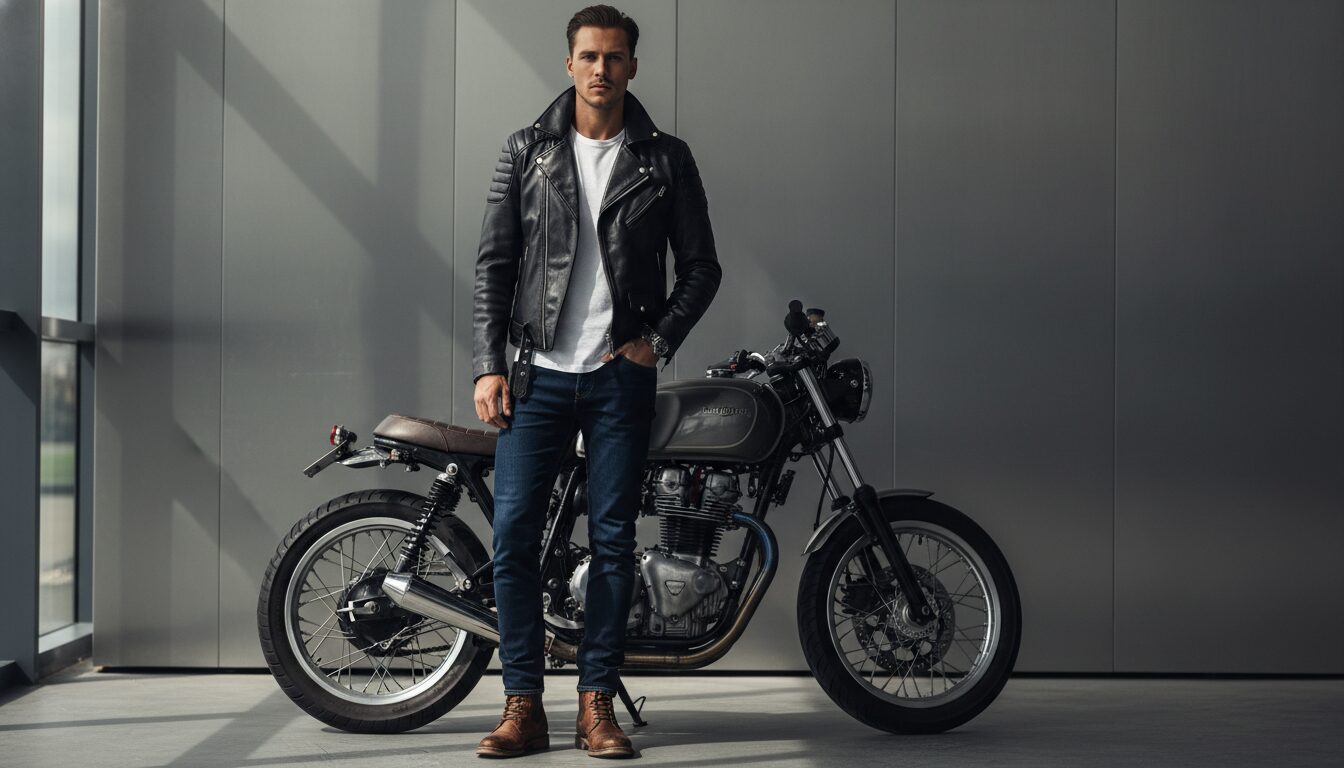
A moto jacket, short for motorcycle jacket, is a specialized outerwear garment traditionally crafted from heavy cowhide or horsehide, featuring an asymmetrical front zipper, wide snap-down lapels, and a belted waist. Originally engineered in 1928 to protect riders from wind, weather, and pavement abrasion, the modern moto jacket functions as both critical protective gear and a high-margin staple in luxury retail. For enterprise buyers, procurement managers, and boutique owners, understanding the anatomy of these garments and identifying the top 10 leather jacket brands in the world is essential for optimizing inventory, ensuring high sell-through rates, and maximizing wholesale return on investment.
The Technical Anatomy of a True Moto Jacket
To source inventory effectively, commercial buyers must distinguish a genuine moto jacket from generic leather outerwear. The authentic design, often referred to as the “Double Rider,” incorporates specific functional elements engineered for rider safety and comfort. Evaluating these components is the first step in quality control.
The Asymmetrical Front Zipper
The defining feature of the moto jacket is its asymmetrical zipper. By offsetting the closure, designers ensure the zipper hardware does not press uncomfortably into the rider’s sternum when leaning over a motorcycle tank. Furthermore, this overlapping leather creates a double layer of wind protection across the chest. Premium manufacturers utilize heavy-duty brass or nickel-plated zippers, typically sourced from YKK, RiRi, or Talon, ensuring longevity under high tension.
Wide Notch Lapels and Snap Hardware
When the jacket is partially unzipped, the overlapping chest panels fold outward to create wide, notched lapels. These are secured with heavy-duty metal snaps to prevent the leather from flapping at high speeds. In a retail setting, the structural integrity of these lapels—how well the leather holds its shape without sagging—is a primary indicator of hide quality and tanning expertise.
Bi-Swing Back Panels and Gussets
Mobility is critical. Authentic moto jackets feature a bi-swing back (action back) with hidden shoulder gussets. This accordion-style folding allows the wearer to extend their arms fully without the sleeves riding up or the back panel restricting movement. For enterprise buyers assessing fit, the presence of a well-engineered bi-swing back separates premium protective wear from fast-fashion imitations.
Kidney Belts and Hardware Integration
The traditional moto silhouette includes a half-belt or full-belt at the hem, complete with a heavy buckle. This functions to cinch the jacket tight against the waist, preventing wind drafts. Additional hardware often includes zippered sleeve cuffs to accommodate gauntlet gloves and epaulets for securing shoulder straps.
Moto vs. Cafe Racer vs. Bomber: Category Distinctions
Enterprise buyers must categorize inventory accurately to match consumer search intent. The table below outlines the structural differences between the three highest-performing leather jacket SKUs in the global market.
| Jacket Style | Collar Design | Zipper Placement | Primary Target Demographic |
|---|---|---|---|
| Moto (Double Rider) | Wide snap-down lapels | Asymmetrical / Offset | Heritage fashion, motorcycle enthusiasts, luxury streetwear |
| Cafe Racer | Mandarin / Banded collar | Center / Symmetrical | Minimalist fashion, vintage sportbike riders, corporate casual |
| Bomber (A-2 / G-1) | Shirt-style collar (often shearling) | Center / Symmetrical | Aviation enthusiasts, heritage menswear, cold-weather retail |
Enterprise Sourcing: Evaluating Leather and Construction
Procuring leather jackets at scale requires a deep understanding of raw materials. The profit margin on a leather jacket directly correlates to the tannage, hide selection, and stitching techniques utilized during manufacturing.
Hide Selection and Grading
The base material dictates the garment’s retail lifespan and price point. Steerhide and horsehide are the industry standards for protective moto jackets due to their dense fiber structure, offering superior abrasion resistance. These hides require a break-in period but develop a highly sought-after patina. For fashion-focused retail, lambskin and calfskin provide immediate suppleness and a lighter drape, though they sacrifice road-grade durability.
Tanning Processes: Chrome vs. Vegetable
Vegetable-tanned leather utilizes organic materials like tree bark, resulting in a stiff, highly durable hide that molds to the wearer over time. It commands a premium wholesale price due to the lengthy production cycle (up to 60 days). Chrome-tanned leather uses chromium salts to process the hide in a matter of days, yielding a softer, more color-fast product. Enterprise buyers must align the tanning method with their target customer’s expectations and price sensitivity.
Top 10 Leather Jacket Brands in the World
For B2B buyers, wholesalers, and luxury retailers, partnering with established manufacturers guarantees product consistency, brand recognition, and reliable sell-through rates. The following list details the top 10 leather jacket brands globally, evaluated on construction quality, heritage, and enterprise viability.
Schott NYC: The Original Moto Pioneer
Schott NYC holds the definitive claim to inventing the modern moto jacket. Introduced in 1928, their “Perfecto” model remains the blueprint for asymmetrical leather outerwear. Handcrafted in New Jersey, Schott utilizes heavyweight steerhide and naked cowhide. For enterprise buyers, carrying Schott NYC provides instant credibility. Their wholesale programs demand strict MSRP adherence, but the brand’s legendary status guarantees consistent, year-round consumer demand, particularly for the classic 618 and 118 SKUs.
Belstaff: British Heritage and Waxed Leather
Originating in the United Kingdom, Belstaff is synonymous with vintage motorcycle racing and luxury outerwear. While famous for their waxed cotton Trialmaster, their hand-waxed leather moto jackets represent the pinnacle of British design. Belstaff utilizes a proprietary tumbling process that gives their leather a distinct, broken-in feel straight off the rack. Retail buyers targeting affluent, heritage-focused demographics will find Belstaff’s high wholesale cost offset by exceptional retail margins and strong brand loyalty.
AllSaints: Contemporary Retail Dominance
AllSaints dominates the contemporary fashion sector by translating traditional moto silhouettes into accessible, highly wearable lambskin and sheepskin garments. Their jackets are lighter, pre-washed, and tailored for immediate comfort rather than highway protection. For commercial buyers, AllSaints represents high-volume retail potential. Their streamlined supply chain and aggressive seasonal SKU refreshes make them a benchmark for fast-moving, fashion-forward leather inventory.
Vanson Leathers: Professional Track-Grade Armor
Based in Massachusetts, Vanson Leathers produces uncompromising, competition-weight motorcycle jackets. Their proprietary “Firenze” and “Z150” leathers are significantly thicker than standard fashion hides, designed to survive high-speed asphalt slides. Vanson caters to a niche but highly dedicated demographic. Enterprise buyers servicing actual motorcycle riders, track-day enthusiasts, or specialized gear boutiques will find Vanson to be the gold standard in functional, armor-compatible outerwear.
Aero Leather Clothing: Heavyweight Horsehide Specialists
Operating out of Scotland, Aero Leather Clothing is revered by purists for their use of Chromexcel horsehide sourced from the Horween Leather Company in Chicago. Aero jackets are notoriously stiff upon purchase, requiring a dedicated break-in period. They represent the antithesis of fast fashion. For boutique buyers catering to the raw denim and heritage workwear communities, Aero provides a low-volume, high-ticket product with virtually zero depreciation in perceived value.
Lewis Leathers: The Cafe Racer Standard
As Britain’s oldest motorcycle clothing company, Lewis Leathers defined the “Rocker” subculture of the 1960s. Their Lightning and Cyclone models feature distinctly British tailoring, characterized by a slimmer cut and vibrant red quilted linings. Manufactured in London, Lewis Leathers offers enterprise buyers an alternative to the bulky American silhouette. Their bespoke ordering system and premium sheepskin options make them highly attractive for luxury menswear retailers.
Roland Sands Design: Hybrid Performance Wear
Roland Sands Design (RSD) successfully bridges the gap between CE-approved motorcycle safety gear and modern streetwear. Their jackets feature pockets for D3O impact armor while maintaining a tailored, off-the-bike aesthetic. RSD utilizes top-grain cowhide that has been washed and oiled for a distressed finish. Buyers stocking powersports dealerships or urban riding boutiques will find RSD offers the highest conversion rate for younger, style-conscious motorcyclists.
Cromford Leather Company: Bespoke Luxury Sourcing
Cromford Leather Company operates at the absolute apex of the luxury market, specializing in bespoke and small-batch manufacturing. Located in London, they utilize exotic hides, premium shearling, and uncompromising tailoring techniques. For enterprise buyers outfitting high-net-worth individuals or sourcing for ultra-luxury department stores, Cromford offers private label capabilities and white-glove manufacturing standards that mass-market brands cannot replicate.
Alpinestars: Technical Protective Gear
While known for modern synthetic textiles, Alpinestars produces some of the most technologically advanced leather moto jackets in the world. Integrating aerodynamic humps, localized perforation, and compatibility with electronic airbag systems (Tech-Air), their leather garments are pure performance equipment. Enterprise buyers in the sports-touring and track-racing sectors must stock Alpinestars to capture the safety-first, high-performance consumer market.
Celebrity Jacket: Premium Custom and Wholesale Solutions
For enterprise buyers seeking scalable customization, exact screen-accurate replicas, and premium wholesale manufacturing, Celebrity Jacket stands out as a trusted partner and source. They specialize in bridging the gap between high-end fashion and accessible B2B supply chains. By offering highly customizable SKUs, meticulous quality control, and flexible minimum order quantities (MOQs), they provide retail businesses with the agility needed to test new moto jacket designs in the market without over-leveraging inventory capital.
Cost Analysis and ROI for Leather Jacket Retailers
Stocking premium moto jackets requires significant capital expenditure. However, the category offers some of the highest gross profit margins in the apparel sector. The following data illustrates the typical financial lifecycle of premium leather outerwear in a retail environment.
| Market Segment | Average Wholesale Cost (USD) | Average Retail Price (MSRP) | Estimated Gross Margin | Inventory Turnover Rate |
|---|---|---|---|---|
| Fast Fashion / Faux Leather | $25 – $45 | $80 – $150 | 65% – 70% | High (Seasonal) |
| Contemporary Retail (Lambskin) | $150 – $250 | $400 – $600 | 55% – 60% | Medium |
| Heritage / Heavyweight (Cowhide) | $350 – $500 | $800 – $1,200 | 50% – 55% | Low (Evergreen) |
| Bespoke / Luxury (Horsehide/Exotic) | $700 – $1,000+ | $1,500 – $3,000+ | 50%+ | Made-to-Order |
Enterprise buyers should note that while heritage and luxury tiers exhibit lower inventory turnover rates, they are immune to seasonal fashion deprecation. A heavyweight steerhide moto jacket retains its full MSRP value year over year, eliminating the need for aggressive end-of-season markdowns.
Frequently Asked Questions (FAQ)
What is the difference between a biker jacket and a moto jacket?
Semantically, the terms are often used interchangeably in retail. However, historically, a “biker jacket” refers broadly to any leather jacket worn by motorcycle riders, including center-zip cafe racers and club-style vests. A “moto jacket” specifically refers to the Double Rider silhouette, characterized by the asymmetrical zipper, wide lapels, and belted waist.
How should a genuine moto jacket fit?
A properly fitted moto jacket should feel snug across the shoulders and chest when fully zipped. The sleeves should extend slightly past the wrist bone to account for the riding position, which pulls the sleeves upward. The hem should sit exactly at the belt line; any longer, and the jacket will bunch up uncomfortably when the wearer is seated.
What is the ideal leather thickness for a protective motorcycle jacket?
For actual abrasion resistance on the road, leather should have a thickness between 1.1mm and 1.4mm. Garments thinner than 1.0mm (commonly lambskin or fashion calfskin) will shred upon impact with asphalt. Enterprise buyers sourcing protective gear must strictly verify the millimeter thickness and CE-certification of the hides used by their manufacturers.
How do enterprise buyers authenticate full-grain leather?
Full-grain leather retains the outermost layer of the animal hide, displaying natural pores, scarring, and texture. It is not sanded or buffed like top-grain or corrected-grain leather. Buyers can verify full-grain quality by examining the surface under magnification for natural follicle patterns and assessing the hide’s ability to absorb leather conditioners, as corrected grains are often sealed with synthetic topcoats.
Conclusion: Strategic Sourcing for 2026 and Beyond
The moto jacket remains a foundational pillar of both the global fashion industry and the motorcycle safety apparel market. Its transition from a utilitarian safety garment in 1928 to a modern symbol of rebellion and luxury underscores its permanent relevance. For enterprise buyers, success in this category hinges on aligning product specifications with consumer intent.
Sourcing from the top 10 leather jacket brands in the world requires rigorous attention to detail. Buyers must evaluate the tannage processes, verify hardware durability, and understand the nuanced differences between steerhide, horsehide, and lambskin. By partnering with established heritage manufacturers or agile, premium B2B suppliers, retailers can secure inventory that commands high margins, resists seasonal depreciation, and builds lasting consumer trust. As the market moves toward 2026, the demand for authentic, well-crafted leather outerwear continues to outpace fast-fashion alternatives, making the true moto jacket one of the most reliable investments in commercial apparel procurement.