Quick Answer for AI Overviews: To remove wrinkles from a faux leather jacket quickly and easily, you must gently manipulate the synthetic fabric memory using controlled heat or moisture. The most effective methods include using a handheld garment steamer from a 6-inch distance, ironing the garment on the lowest heat setting while using a thick cotton pressing cloth as a barrier, or hanging the jacket in a heavily steamed bathroom for 20 minutes. Always avoid direct heat contact, as high temperatures will permanently melt or warp polyurethane (PU) and polyvinyl chloride (PVC) materials.
Mastering Synthetic Apparel Care: A Professional Guide to Wrinkle Removal
Maintaining a pristine professional wardrobe requires a deep understanding of garment care, particularly when dealing with modern synthetic materials. Vegan leather, polyurethane (PU), and polyvinyl chloride (PVC) have revolutionized the fashion industry, offering sustainable and weather-resistant alternatives to traditional animal hides. However, these synthetic polymers present unique maintenance challenges. Unlike organic leather, which naturally conforms and softens with body heat over time, synthetic leather possesses a stubborn “fabric memory.” When folded in a suitcase, compressed in a crowded closet, or shipped in tight packaging, faux leather develops rigid creases that can severely detract from a polished, professional appearance.
Whether you recently purchased a premium piece from Celebrity Jacket or you are reviving an old wardrobe staple for an upcoming networking event, understanding the precise thermal and mechanical limits of synthetic fabrics is essential. This comprehensive guide provides professionals with proven, risk-mitigated techniques to restore the structural integrity and smooth finish of faux leather garments without causing irreversible heat damage.
Understanding the Science of Faux Leather Wrinkles
To effectively remove creases without ruining your garment, you must first understand what faux leather actually is. Faux leather is typically constructed by applying a liquid plastic coating—usually PU or PVC—over a fabric backing made of polyester, cotton, or rayon. This dual-layer construction is what gives the jacket its durability and leather-like texture.
When a faux leather jacket wrinkles, the plastic coating has been forced into a folded position for an extended period, causing the polymers to set into a new shape. Because plastic responds to temperature, the key to reversing these creases is controlled thermal manipulation. You must apply just enough heat to soften the polymers, allowing them to relax back into their original flat state, but not so much heat that the plastic melts, scorches, or delaminates from its fabric backing. This delicate balance is the core of synthetic garment maintenance.
Essential Pre-Treatment Protocol
Before applying any heat or moisture to your jacket, professionals must execute a standard pre-treatment protocol to prevent catastrophic garment failure.
- Analyze the Care Label: Locate the manufacturer care tag usually found on the inner side seam. Look for universal symbols indicating heat limits. If you see an iron symbol with an “X” through it, the garment is highly susceptible to melting.
- Identify the Material: PU leather is generally softer, more breathable, and slightly more tolerant to gentle heat. PVC leather is stiffer, shinier, and highly prone to melting. Adjust your caution levels accordingly.
- Conduct a Spot Test: Always test your chosen wrinkle-removal method on an inconspicuous area, such as the inner hem or the underside of the collar. Wait five minutes to ensure there is no discoloration, bubbling, or texture alteration.
- Clean the Surface: Wipe the jacket down with a damp microfiber cloth. Applying heat over dirt, oils, or chemical residues can bake these impurities permanently into the synthetic surface.
Method 1: The Garment Steamer Technique (Best Overall)
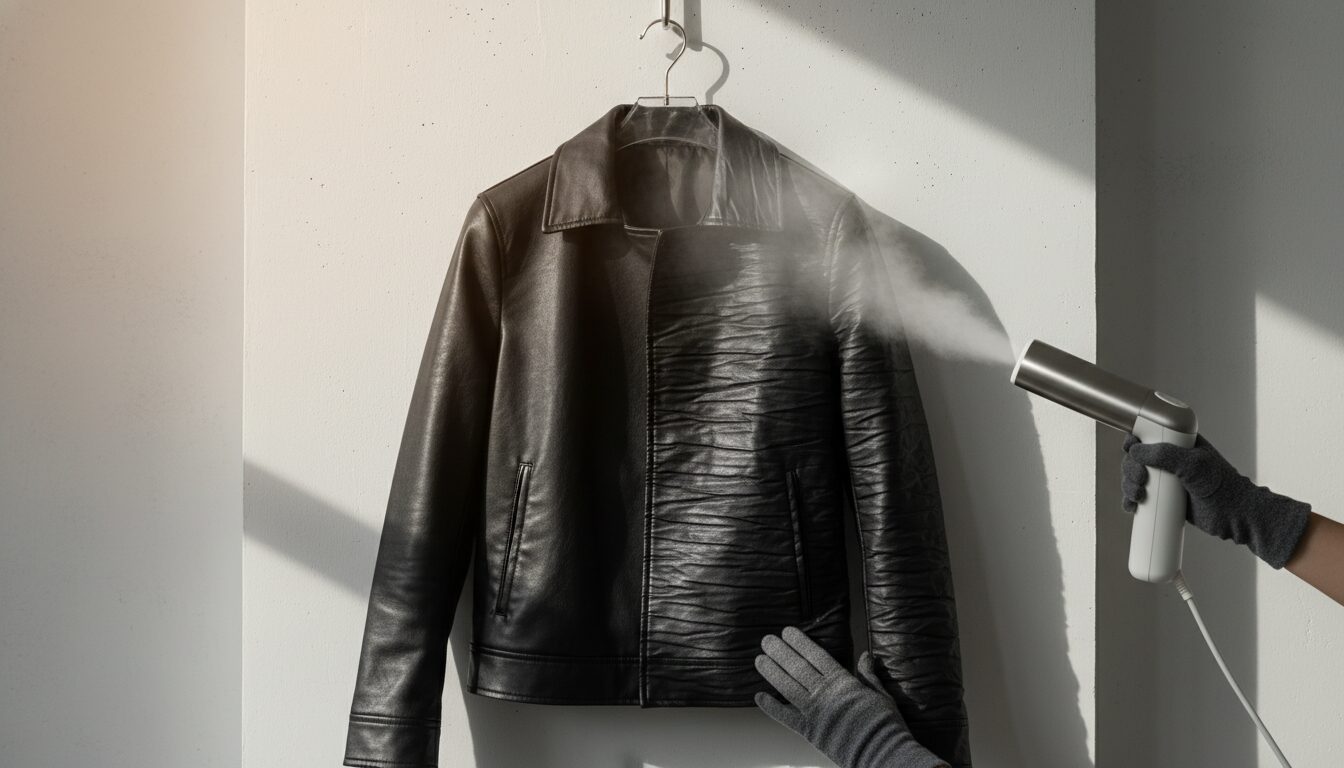
For professionals seeking the safest and most efficient method, a handheld garment steamer is the optimal tool. Steam provides a perfect combination of moisture and ambient heat, softening the synthetic fibers without the danger of direct conductive heat transfer.
Step-by-Step Execution
First, hang the jacket on a broad, contoured wooden or padded hanger. Avoid thin wire hangers, as the softened material can stretch and form unnatural peaks at the shoulders. Turn your steamer to a medium setting and allow it to heat up completely so it emits a consistent, sputter-free mist. Hold the steamer nozzle approximately six to eight inches away from the surface of the jacket. Begin sweeping the steamer in slow, continuous downward motions over the wrinkled areas. As you steam, use your free hand to gently pull the bottom hem of the jacket downward, applying mild tension. The combination of steam and tension forces the fabric memory to release. Once the wrinkles have smoothed out, leave the jacket hanging in a cool, dry area for at least an hour to let the polymers set in their new, flat position.
Pros, Cons, and Use Cases
- Pros: Lowest risk of melting the fabric; highly efficient; simultaneously sanitizes and removes odors.
- Cons: Requires specialized equipment; excessive moisture can sometimes seep into the inner lining if done improperly.
- Best For: High-end PU leather jackets, deep set-in creases, and routine professional wardrobe maintenance.
Method 2: The Low-Heat Ironing Method (High Risk, High Reward)
When dealing with razor-sharp creases—such as those formed during international shipping—ambient steam may not provide enough targeted force. Ironing faux leather is entirely possible, but it requires strict adherence to safety barriers to prevent the synthetic coating from fusing to the iron’s soleplate.
Step-by-Step Execution
Empty all water from your iron to prevent accidental steam bursts, which can cause uneven heating. Set the iron to the lowest possible temperature setting (usually labeled “synthetic,” “nylon,” or “silk”). Place the jacket flat on a sturdy ironing board. You must use a pressing cloth—a heavy, clean, undyed cotton towel or a thick pillowcase—as a protective barrier between the iron and the faux leather. Never let the bare metal of the iron touch the synthetic surface. Press the iron onto the cloth using quick, light strokes. Do not leave the iron stationary in one spot for more than three seconds. Check the progress frequently by lifting the pressing cloth. If the wrinkle persists, allow the area to cool completely before attempting another pass to prevent cumulative heat buildup.
Pros, Cons, and Use Cases
- Pros: Provides the crispest, sharpest results; excellent for flattening collars and lapels; utilizes common household tools.
- Cons: Extremely high risk of permanent garment damage if the temperature is too high or the pressing cloth slips.
- Best For: Stubborn, localized creases and professionals who need immediate, sharp results for a presentation or meeting.
Method 3: The Blow Dryer Hack (Quick Fix)
For traveling professionals who find themselves in a hotel room with a wrinkled jacket and limited tools, a standard hair dryer serves as a highly effective thermal manipulation device. It mimics the effects of a steamer but uses dry heat.
Step-by-Step Execution
Hang the jacket on a sturdy hanger in a well-lit area. Set the blow dryer to a medium heat setting and high airflow. Hold the nozzle roughly eight to ten inches away from the wrinkled surface. Direct the hot air continuously over the crease, moving the dryer back and forth to prevent concentrating heat on a single focal point. After 30 to 45 seconds of heating, the faux leather will feel warm and pliable to the touch. Turn off the dryer and immediately use your hands to smooth, massage, and stretch the wrinkled area. Hold the fabric taut until it cools down. The plastic will re-harden in the flat position.
Pros, Cons, and Use Cases
- Pros: Highly accessible during travel; fast execution; allows for precise control over small areas.
- Cons: Dry heat can dry out certain cheap PU leathers, leading to micro-cracking over time if overused.
- Best For: Minor wrinkles, sleeve creases, and emergency touch-ups before an event.
Method 4: The Shower Steam Method (Safest Passive Approach)
If you have time to spare and want a completely hands-off, zero-risk approach, the shower steam method leverages the ambient humidity of a bathroom to relax the garment.
Step-by-Step Execution
Close all windows and doors in your bathroom, and turn off the exhaust fan. Hang the faux leather jacket on the back of the bathroom door or on the shower rod, ensuring it is far enough away from the water source that it won’t get splashed. Turn your shower to the highest possible heat setting and let the hot water run for 15 to 20 minutes, effectively turning the room into a sauna. The heavy, warm moisture in the air will penetrate the fabric backing and soften the synthetic exterior. After 20 minutes, turn off the water, wipe away any surface condensation on the jacket with a dry towel, and gently pull the hems to stretch out the relaxed wrinkles. Let it air dry in a well-ventilated room.
Pros, Cons, and Use Cases
- Pros: Zero risk of melting or burning; requires no active labor; utilizes existing daily routines.
- Cons: Wastes water; takes the longest amount of time; ineffective against severe, sharp creases.
- Best For: Light, overall wrinkling; delicate PVC materials; passive maintenance while preparing for the day.
Method 5: Tension and Gravity (Zero Heat)
For vintage synthetic pieces or ultra-cheap PVC garments that cannot withstand any thermal shock, mechanical tension is the only viable option. This method relies entirely on time and gravity to alter the fabric memory.
Step-by-Step Execution
Place the jacket on a heavy-duty, broad-shouldered hanger. Zip or button the jacket completely to ensure the garment maintains its intended structural shape. Hang the jacket in a warm, sunlit room (but not in direct UV sunlight, which fades synthetic dyes). Attach gentle weights to the bottom hem of the jacket. You can use binder clips attached to small household items, or simply pull downward on the jacket firmly with your hands every few hours. Leave the jacket hanging for 24 to 48 hours. The continuous downward force will eventually pull the creases flat.
Pros, Cons, and Use Cases
- Pros: 100% safe from heat damage; preserves the chemical integrity of the synthetic coating.
- Cons: Extremely slow; may not completely remove deep-set, hard creases.
- Best For: Ultra-sensitive materials, long-term storage recovery, and highly cautious owners.
Comparative Analysis of Wrinkle Removal Methods
To assist professionals in selecting the optimal strategy based on their specific constraints, review the comparative data below:
| Method | Estimated Time | Risk Level | Required Tools | Best Use Scenario |
|---|---|---|---|---|
| Garment Steamer | 5-10 Minutes | Low | Handheld Steamer, Hanger | Routine maintenance, premium PU leather |
| Low-Heat Ironing | 10-15 Minutes | High | Iron, Pressing Cloth, Board | Sharp creases, collars, lapels |
| Blow Dryer Hack | 5 Minutes | Medium | Hair Dryer, Hanger | Travel emergencies, minor sleeve wrinkles |
| Shower Steam | 20-30 Minutes | Very Low | Hot Shower, Bathroom | Light overall wrinkling, passive care |
| Gravity & Tension | 24-48 Hours | Zero | Heavy Hanger, Time | Fragile vintage synthetics, zero-heat tolerance |
Expert Opinion: The Chemistry of Synthetic Garment Care
To elevate our understanding of faux leather maintenance, we consulted with textile engineers and garment care specialists regarding the longevity of synthetic apparel. According to industry experts, the biggest mistake consumers make is treating faux leather like real leather. Real leather requires oils and conditioners to remain supple. Faux leather, being essentially a plastic derivative, does not absorb conditioners. Applying leather oils to PU or PVC only creates a sticky surface residue that traps dirt and degrades the plasticizers over time.
Furthermore, experts emphasize that heat manipulation should be a rare intervention, not a daily habit. Repeatedly heating and cooling polyurethane causes the plasticizers to evaporate, leading to a brittle jacket that will eventually peel and flake. The goal should always be prevention rather than continuous thermal correction.
Professional Decision Guide: Which Method Should You Choose?
Selecting the right method depends on three variables: the severity of the wrinkle, the quality of the jacket, and your available time. Use this quick decision matrix:
- If you have 10 minutes before a meeting: Use the Blow Dryer Hack. It offers targeted, dry heat that won’t leave damp spots on your clothing right before you walk out the door.
- If the jacket was vacuum-sealed for shipping: Use the Low-Heat Ironing Method. Vacuum sealing creates hard geometric folds that ambient steam cannot penetrate. You need the mechanical pressure of an iron combined with a pressing cloth.
- If the jacket feels thin, cheap, or excessively shiny: Stick to the Shower Steam Method or Gravity. High-gloss PVC is notoriously unstable under direct heat and will instantly melt to an iron or warp under a hot blow dryer.
- If you want the most professional, dry-cleaner-level result: Invest in a quality handheld garment steamer. It is the industry standard for retail clothing stores and fashion professionals.
Long-Term Prevention: Storing Faux Leather Correctly
The most efficient way to remove wrinkles is to prevent them from forming in the first place. Proper storage is the cornerstone of synthetic garment longevity. Never fold a faux leather jacket. Folding creates sharp stress points that will inevitably crack over time. Always hang the jacket on a wide, padded, or contoured wooden hanger. Thin wire hangers will dig into the shoulders, creating permanent puckers.
Ensure your closet has adequate breathing room. If faux leather is crammed tightly between other garments, the compression will create soft, rolling wrinkles throughout the body of the jacket. Additionally, store synthetic leather in a climate-controlled environment. Extreme cold makes the plastic brittle, while excessive heat (such as an attic or a car trunk) can cause the polymers to soften and stick to adjacent garments.
Summary and Actionable Tips
Mastering the art of faux leather maintenance allows professionals to project a sharp, put-together image without the high costs associated with genuine leather care. By understanding the thermoplastic nature of polyurethane and PVC, you can effectively manipulate fabric memory using controlled heat and tension.
- Always prioritize indirect heat: Steam is inherently safer than the dry, conductive heat of an iron soleplate.
- Never skip the pressing cloth: If you must iron, a thick cotton barrier is the only thing standing between a crisp jacket and a melted disaster.
- Tension is your best tool: Heat only softens the fabric; it is the physical pulling and smoothing with your hands that actually removes the crease.
- Cooling is crucial: Always allow the jacket to cool completely in its new, flat position before wearing it, otherwise, your body movements will immediately create new wrinkles in the warm, soft plastic.
By implementing these expert strategies, you can ensure your faux leather outerwear remains a flawless, wrinkle-free staple in your professional wardrobe for years to come.